About Bellingen Seedsavers

We are a group of like-minded growers of edible and useful heritage plant varieties in the Bellingen area of northeast New South Wales, Australia.

Our climate varies from frost-free coastal areas to inland river valleys and highlands with frosts. Bellingen has an average annual rainfall of 1507ml.

Showing posts with label asparagus. Show all posts

Saturday, 26 October 2013

Garden Visit to Robyn's Garden near Dorrigo


Setting up the seed table with seeds and plants to share always arouses our expectations of a plant that will fit into our gardens.


 It was perfect weather, as we gathered on the lawn in the shade, but for those of us who didn't bring a warm top it was soon to be a cool experience because a breeze from the South soon appeared to lower temperatures.


Our visit to Robyn's garden was a real climate change for our members in the Bellinger Valley. It is always interesting to see another garden and Robyn's garden, situated on the Dorrigo Plateau, above the Bellinger Valley, had expansive views of the rolling green paddocks of the plateau.

Trandescantia


The plateau climate allows Robyn to grow many plants that fail to thrive in the warm temperate/subtropical climate of the Bellinger Valley.


Alstroemeria (Princess Lily)


These Alstroemerias formed a large clump. Personally I prefer these bold coloured varieties without the muddy markings that some have.


Rhubarb much prefers the cool weather of the plateau.


Robyn finds this Plectranthus groundcover very useful to grow under her windbreak because it suppresses the germination of Privet seeds.


It is Iris time, ....


 and Hippeastrum time.
Deutzia


Robyn's Asparagus bed is fairly new. She will wait at least another year before picking.  Meanwhile, she will load on the manure and mulch. The plateau's soil is volcanic in origin. It drains very well and nutrients are easily leached away.


Berries of all kinds thrive in the plateau climate.


Robyn's Broccoli requires protection from the birds.

Prawn Plant or Shrimp Plant growing with Brundfelsia.


Comfrey, another plant that thrives on the plateau, is a wonderful mulch and soil conditioner.


A Savoury Loaf featured on the afternoon tea table.


Elaine's cordial has a secret mix of herbs and no syrup. She has promised to share the recipe with us.

Come along to our next Seedsavers' event. A reliable source tells us it will be in December at at Spickets Creek, at the end of the navigable section of the Bellingen to Bowraville Rd. Watch for details on our events page.


The 'My T Fine String Band' entertained us during afternoon tea. What a treat!


Friday, 16 November 2012

November visit to North Bank Community Garden in Bellingen


Chard
We had a turnout of twenty for this gathering and we were lucky that we were able to enjoy a fine day, followed that evening by a lovely big downpour.  We sheltered from the sun under the bamboo yurt for the first time, which worked well. Here are some of Jeff’s great photos.


Our seedtable


Before exploring the garden we broke into three groups;

(1) people from the coastal areas, 

(2) from the valleys 

(3) from the Dorrigo Plateau.  


Action at the seedtable is always brisk


Everyone shared their experiences of the highs and lows of coping with our unpredictable climate – what was growing successfully and what not, etc. During feedback time, the groups’ concerns and interests ranged over many topics.


The group shared garden lore


Group 1:  dry conditions/bush fires, watering, erosion control with herbs, dry shock but reduced weed growth, climate change, the benefits of Lady Beetles controlling aphids  (lots around at  present).  Use more mulch.  Visitor from Korea – discussion of crops;  also UN disaster relief work.
Asparagus bed

Comfrey and taro

 Group 2:  Basil - fungal conditions and rust – use of biodynamics –stir one cup of fresh Casuarina needles in a bucket of water;

 Strawberry propagation -  take plantlet closest to mother plant,

There were questions about sourcing sesame seeds to grow.

A grouping of edibles

Yarrow

 Group 3:  Weed control – tussock, thistle, ink weed, sword grass, wild tobacco, whisky grass.  Effects of dry weather on garden;  alpacas;  acreage use; 

Tip: old timers’ methods of weed control and old recipes e .g. molasses sprayed on tussock etc (cattle love molasses); 

  vinegar/salt - acts like Roundup;  dolomite;  lime sprayed on nettles, etc.   Just dig up!

  If you would like to contribute anything to these discussions, please email me or bring to the Q&A session on 2 or 16 December.


Zucchini


The tea table is always a place to share gardening stories and recipes for our produce.


Auntie Beryl's Processor Moist Orange Cake (left)

 Ingredients: 
 •  2 washed navel  oranges about 220 grams each
• 185 gm softened butter
• 1 1/2 cups castor sugar
• 1 teaspoon vanilla essence
• 3 eggs
• 2 1/4 cups self raising flour

Icing:
•1/2 cup white sugar
• juice of one orange

Method

• Preheat  fanforced oven to 160 degress C or 170degrees for non fan farced oven

• Grease 22cm spring form pan and line the base

• cut oranges into 1/4s and remove seeds

• place orange quarters in processor and pulse until chopped

• add butter, castor sugar and vanilla and pulse until combined

• add eggs and pulse

• add flour and pulse with small bursts until flour is all blended

• Bake 55 to 60 minutes...cool 10 minutes

• pour over icing syrup OR melt some chocolate (can use choc chips) and spread

Sunday, 8 April 2012

Bellingen Seedsavers visit Jodie and Michael on the Dorrigo plains.

Click on a pic to see all the pics in full screen.


We first called at the 'planet dorrigo' mountaintop nursery at 163 Maynard Plains Road, Dorrigo.   www.theplantsource.com.au
Steve answers our questions.


Here Steve Sutton has some beautiful plants at excellent prices in arguably one of the most scenic settings for a nursery in Australia. Most of us were interested in the plants that would survive in our coastal conditions but of course Steve also stocked plants for his locality, plants that tolerate frosts and sleet. We came away with a leucothoe plant, with gold variegated leaves, some abelias with dark red autumnal tones and a new salvia to add to the collection of bee attracting plants.


On arrival at Michael and Jodie's house we were again impressed by the setting.

In eighteen months they have created a flourishing vegetable garden well serviced by chook tractors. Here is how Michael and Jodi describe their garden.


"Our garden is quite young (about 18 months) but we have managed to be reasonably prolific in that time! The main part of the garden is vegetables (annual and perennial) in contoured beds. These are very close to the house thus should be fine for access. We also use chickens/ducks/geese rotated through some of the garden beds in a bird netted area and have the hothouse/seedling area. We also have goats (great for manure close at hand), Dexter cattle, alpacas and a horse.
View from Michael and Jodi's front door
Slightly further on we have an orchard that we are establishing below the house (this is a steeper walk to get up and down to), an area of large tobacco trees that we are experimenting with using to nurse-maid some sub tropical trees to develop a "food forest". The garden is constantly expanding as we are in the process of expanding to market gardening to sell a mixture of produce. Overall a mix of "a beautiful mess" and more conventional row style gardening!


The greenhouse is essential because of the cold tablelands climate.


Growing Chinese Waterchestnut in a container prevents this plant from becoming a water weed and makes harvesting much easier.


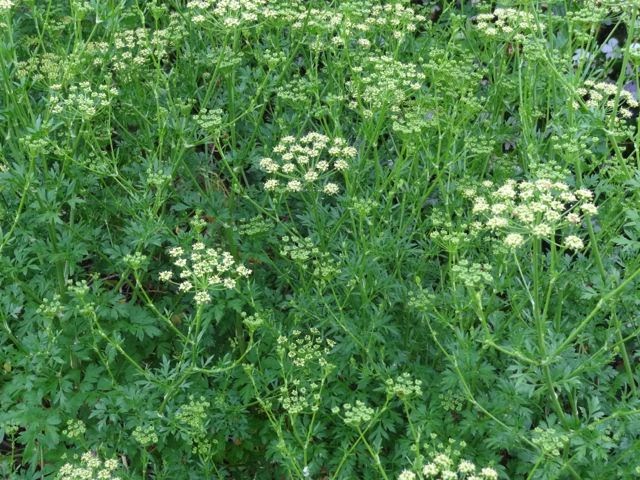
Parsley is flourishing on the tableland but is struggling in the coastal humidity.


Kang Kong grows well in the balmy summer but will soon succumb to frost.

Michael and Jodi have restored this chaff cutter to cut mulch.

 This fence of mixed berries is temporary. They will soon be transplanted to another area.

Jodie has imported a blocking tool that presses out a peat moss mix. Each block, large or small, becomes an individual seedbed and the plants can be transplanted with minimum disturbance of the roots.


This is the large blocking tool. Read more.


This chook dome is used to clear a patch of grass before planting.


A bed of asparagus and nasturtium is surrounded by rows of comfrey. Fertilising the asparagus with comfrey and nasturtium is therefore convenient.


Globe artichokes love the climate.


These yam bean dipping sticks were cut from the large yam bean below.


This huge yam from a yam bean may have grown over two summers. Unlike potato or apple it will not quickly oxidise when cut and exposed to the air.


Nell's pineapple butter tarts were delicious.


These tasty kofta burgers were a savoury treat.


A yummy pumpkin and polenta cake. We certainly have a glut of pumpkins this season.


This moist gluten free date cake was also a hit.


These jelly palm fruits were thirst-quenching and the seed was then available for planting.


LinkWithin


Related Posts Plugin for WordPress, Blogger...

LinkWithin

Related Posts Plugin for WordPress, Blogger...