About Bellingen Seedsavers

We are a group of like-minded growers of edible and useful heritage plant varieties in the Bellingen area of northeast New South Wales, Australia.

Our climate varies from frost-free coastal areas to inland river valleys and highlands with frosts. Bellingen has an average annual rainfall of 1507ml.

Showing posts with label Acerola. Show all posts

Thursday, 24 January 2019

Midsummer in a Bellingen seedsaver's garden.

Even in the hottest of midsummer with heatwaves pounding Australia we have produce available and an exciting garden to explore.


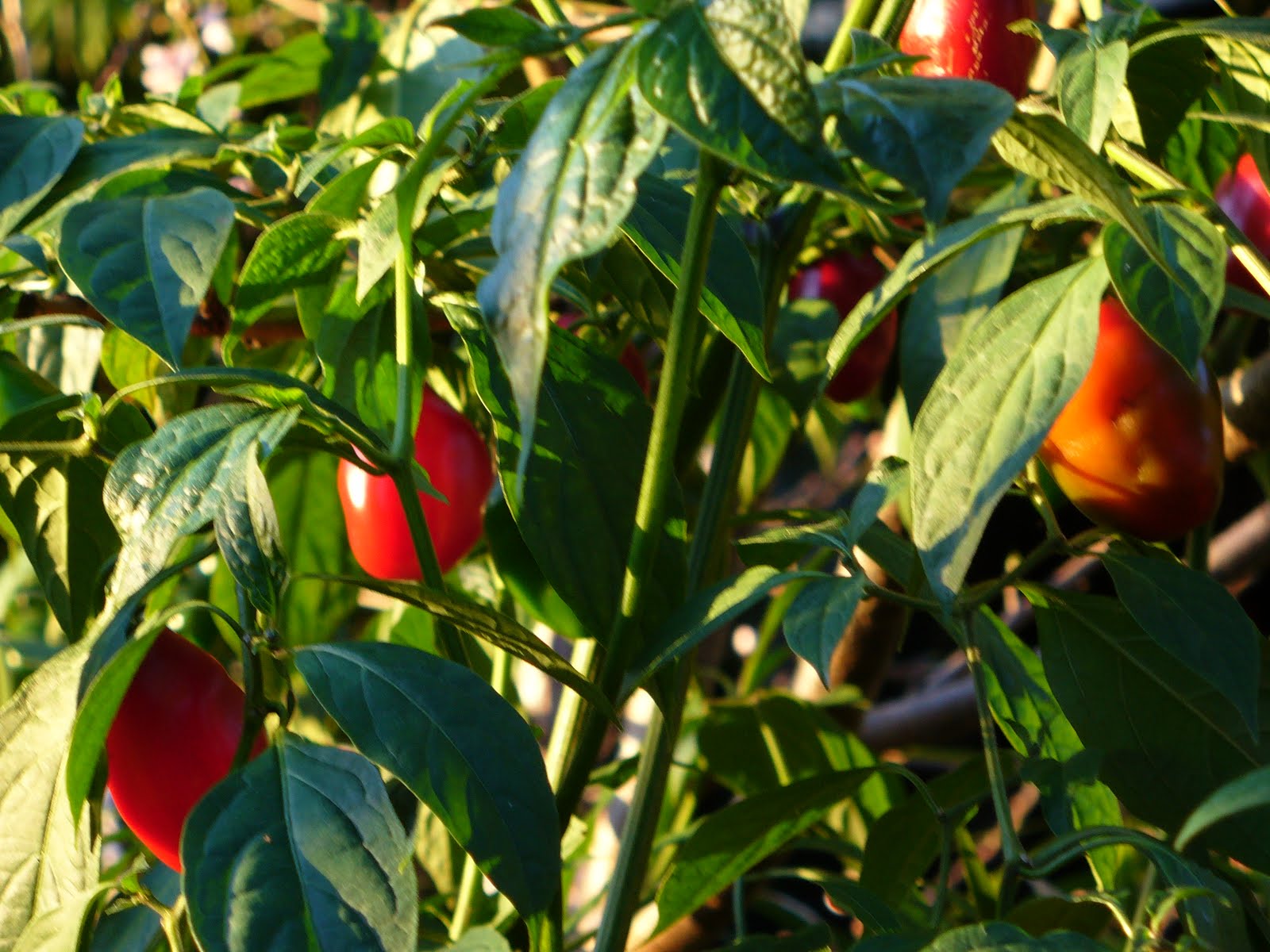
A capsicum with a bite
Perennial Capsicum with a bite

Perennial Capsicum seem to grow more of a bite and end up like mild chilis as they age.


Baby custard apple alongsiude a chili
Baby custard apple alongside chili

This Amarillo Chili has grown up supported by the branches of the Custard Apple.


Amarillo Chili

Our first really ripe Chili of the season


Surely a most beautiful clumping bamboo
Mexican Weeping Bamboo

This clumping bamboo screens and weeps. It is easy to manage.


Baby Golden Hornet crabapples
Baby Golden Hornet Crabapples

Golden Hornet is a universal apple tree pollinator. The fruit is small.


Path to explore at the pond

Even tiny mango trees can produce.

We grew this small tree from seed. It may turn out to be dwarf. This a five year old tree.


The Amla has suddenly shot up.

Perhaps we will have fruit this season.


Curious chooks
Curious chooks

Not all eggs.
Not all eggs.


Grey Mugwort makes a great nest liner and discourages mites.


Tree tomatoes are a heavy producer.
Tamarillos


Tamarillos are our most productive fruit. Use as a tomato or a desert fruit.


Green Sapote
Green Sapote

Although this Green Sapote is yet to fruit it still contributes a fabulous tropical evocative shape to our garden.

Feeding the birds with nectar
Golden Lyre Grevillia

This Grevillia is loved by all of our local birds.


Delicious fruit
Baby Acerola cherries

The fruit is scarce but delicious.


Tuesday, 5 July 2011

Growing in a Seed Saver's Garden near Bellingen in Late June/Early July

We have had no frosts as yet and the the winter is mild.


Brazilian Spinach (Alternantera sissoo) is still producing edible leaves in the sun although the plants in the shade look miserable.


This tree chili or rocoto chili just grows away in this weather and produces chilis throughout the winter. It also grows easily from seed.


A Jicama vine grows up into a young macadamia and the apple (root) probably needs harvesting. This is useful grated into salads. It does not turn brown like a potato or Yacon once peeled.


This Star Apple (Chrysopyhllum cainito) has lost a branch in each of its two previous winters in this garden. It may be old enough to survive the cold this year. The leaves are most attractive with the brown furry underside.


A lone and small Acerola fruit lingers. The best fruiting was during late summer.


Bacopa monniera (Memory Herb) loves the shade and wet conditions

Cape Gooseberry (Physalis peruviana) cases yet to dry out so the fruit is still green inside the case. The cases seem to drop and disappear as they ripen so it is a daily task to pick the ripe fruit. I am not sure yet that it is worth it.


An artichoke regrows after being cut back.  Quite a few of the seed grown artichokes were too prickly to bother with. I think this one was relatively spine free.


This nectarine is just coming into flower. I suppose our winter corresponds to its native spring. Birds, bats and fruit fly consumed most of last years crop.


Galangal thrives in part shade and evening sun. I have yet to dig and use this plant.


Two pics of a lone fruit on a Peanut Butter (Bunchosia) Fruit tree. This is more of a shrub at the moment and the fruit is smaller than the egg sized fruit I was expecting. It tastes sweetish and the texture is peanut butter like. 


Perhaps as this tree ages the fruit will increase in size. I'm hoping!!


Mushroom plant (Rungia klossii ) thrives in shade with plenty of water as long as it is not too cold. There is plenty still growing to add to stir fries, soups and stews, even sandwiches, for a mushroom flavour and protein. The red stems belong to an amaranth that is still lingering.

Enjoy
John


LinkWithin


Related Posts Plugin for WordPress, Blogger...

LinkWithin

Related Posts Plugin for WordPress, Blogger...