About Bellingen Seedsavers

We are a group of like-minded growers of edible and useful heritage plant varieties in the Bellingen area of northeast New South Wales, Australia.

Our climate varies from frost-free coastal areas to inland river valleys and highlands with frosts. Bellingen has an average annual rainfall of 1507ml.

Showing posts with label Brazilian Spinach. Show all posts

Tuesday, 25 April 2017

Some Edible Perennials - Tree Spinach, Moringa, Sweet Leaf & more

Tree Spinach
Some very useful links from Survival Gardener

http://survivalgardener.com/chaya-tree-spinach/

http://survivalgardener.com/2015/11/how-to-make-moringa-powder/

http://survivalgardener.com/katuk-sweet-leaf-bush/

http://survivalgardener.com/sissoo-spinach/ http://survivalgardener.com/

http://survivalgardener.com/2015/08/purslane-a-nutrient-dense-weed-with-high-omega-3/  

http://survivalgardener.com/2015/05/sweet-potato-greens-vs-prostate-cancer/
Sweet Leaf (Katuk)

Moringa

  and Pigeon Peas

http://survivalgardener.com/pigeon-peas/

"When they’re dry, you boil them longer,” says the West Indian native who goes by the name Mackadoo at Vermont Square Community Garden in Los Angeles. “My mother cooked chicken and rice and peas all the time.”

When green, the entire pod can be eaten, master gardener Tamiko Nakamoto says.

“In the Caribbean they also eat the young shoots just coming up,” says Nakamoto, also a member of the Vermont Square garden." Los Angeles Times

Friday, 9 May 2014

Fruit and vegetable harvest May 9 in a subtropical/warm temperate area of NSW


Bananas


Blue Browallia with red Irisene behind

Brazilian Spinach

Grapefruit

Coffee

Custard Apple

Mouse Melon

Perennial Capsicum

Basella

Edible Hibiscus

Fig


Jackfruit

Kent pumpkin

Lemon Basil

Lucullus silver beet

Mandarin

Meyer Lemon

Mountain Paw Paw

Naranjila flowers

Almost ripe Naranjila fruit

Bunchosia

Rocket


Single tree dahlia

Small white guava

Katuk/Sweet Leaf

Tamarillo

Tree Chili

Small cream guava

Wing Bean
Choko/Sechium edule


Cherimoya


Tuesday, 5 July 2011

Growing in a Seed Saver's Garden near Bellingen in Late June/Early July

We have had no frosts as yet and the the winter is mild.


Brazilian Spinach (Alternantera sissoo) is still producing edible leaves in the sun although the plants in the shade look miserable.


This tree chili or rocoto chili just grows away in this weather and produces chilis throughout the winter. It also grows easily from seed.


A Jicama vine grows up into a young macadamia and the apple (root) probably needs harvesting. This is useful grated into salads. It does not turn brown like a potato or Yacon once peeled.


This Star Apple (Chrysopyhllum cainito) has lost a branch in each of its two previous winters in this garden. It may be old enough to survive the cold this year. The leaves are most attractive with the brown furry underside.


A lone and small Acerola fruit lingers. The best fruiting was during late summer.


Bacopa monniera (Memory Herb) loves the shade and wet conditions

Cape Gooseberry (Physalis peruviana) cases yet to dry out so the fruit is still green inside the case. The cases seem to drop and disappear as they ripen so it is a daily task to pick the ripe fruit. I am not sure yet that it is worth it.


An artichoke regrows after being cut back.  Quite a few of the seed grown artichokes were too prickly to bother with. I think this one was relatively spine free.


This nectarine is just coming into flower. I suppose our winter corresponds to its native spring. Birds, bats and fruit fly consumed most of last years crop.


Galangal thrives in part shade and evening sun. I have yet to dig and use this plant.


Two pics of a lone fruit on a Peanut Butter (Bunchosia) Fruit tree. This is more of a shrub at the moment and the fruit is smaller than the egg sized fruit I was expecting. It tastes sweetish and the texture is peanut butter like. 


Perhaps as this tree ages the fruit will increase in size. I'm hoping!!


Mushroom plant (Rungia klossii ) thrives in shade with plenty of water as long as it is not too cold. There is plenty still growing to add to stir fries, soups and stews, even sandwiches, for a mushroom flavour and protein. The red stems belong to an amaranth that is still lingering.

Enjoy
John


Tuesday, 8 March 2011

Edible Plants Thriving in Early March


The following edible plants are enjoying the rain, humidity and remaining high temperatures of early March in the Bellingen Valley. Soon the cooler weather, and it some cases frost, will cause some of the cold sensitive vegetables to die off or become dormant. What plants are growing strongly in your area at this time?

Wing Beans (Psophocarpus tetragonolobus) love the subtropical conditions of our summer.


The bean pods are delicious in stir fries. The plant regrows from the roots as the summer heat returns.

The whole plant is edible and the shoots can be eaten.
A ripe Panama Berry (Mutingia calabura) tastes like a boiled lolly.
The Panama Berry flower


It is a useful small tree
Yacon (Smallanthus sonchifolius). The tuber is eaten like a sweet potato.
Crookneck zucchine loves the slightly cooler weather of March.
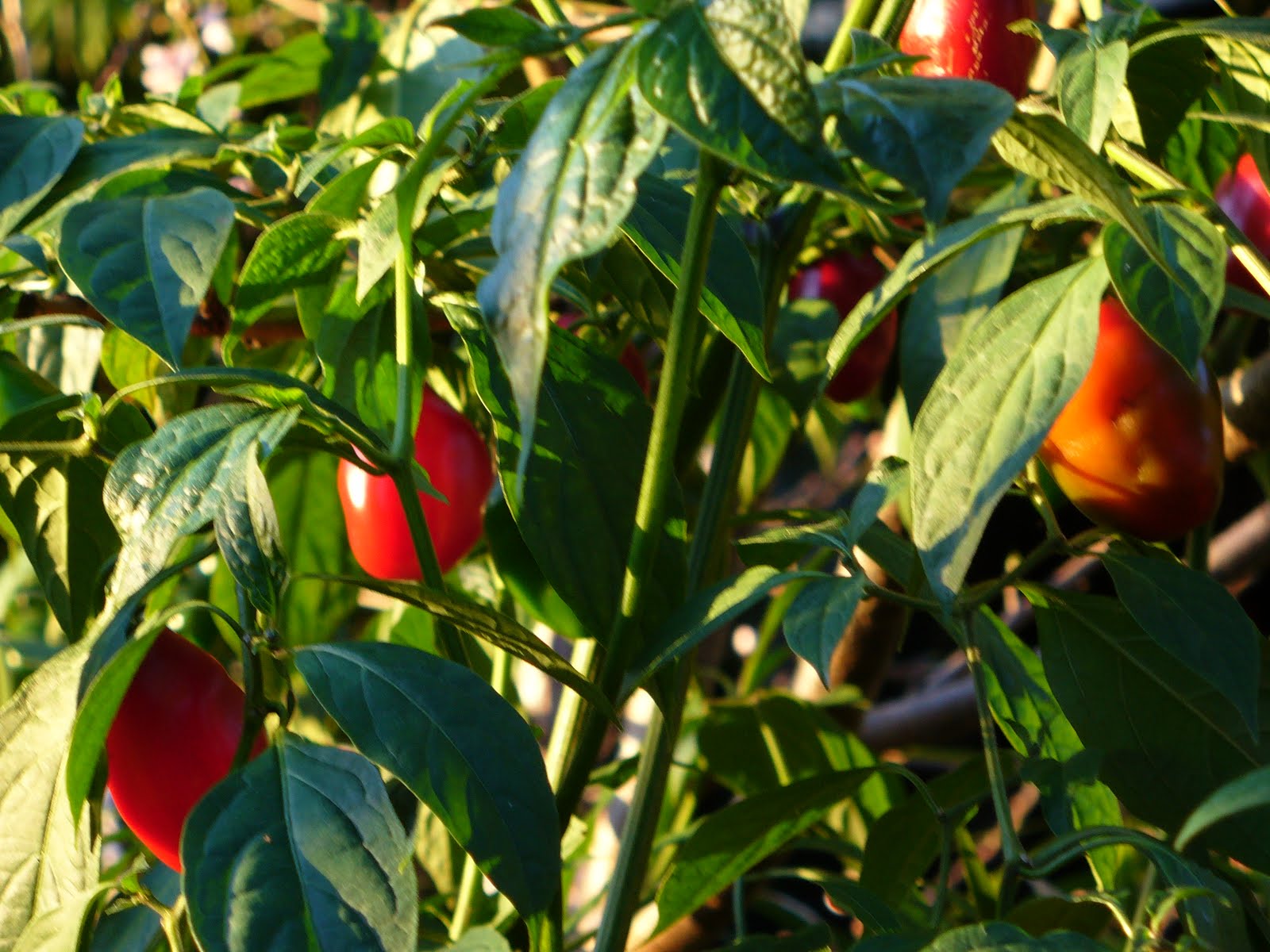
A mild sweet capsicum is so useful given the prices in the greengrocers.
The capsicum (mild peppers) are small but plentiful.


This Rocoto (Tree Chilli) is three years old and prolific. The birds eat many and this is O.K. because the fruit is so hot. We use these very sparingly.
Brazilian Spinach also loves this weather. It's best cooked although it is often used in salads.
Egyptian Spinach (Corchorus olitorius) can be dried and used to thicken soups.  The Arab name is "Molokhia." Its bland leaves (without any bitterness) make a great salad.

Taro had a growth burst in high summer. It loves the rain.


Daley's Nursery's says that Taro can be substituted for potato in any dish. I've yet to try it. Do any readers have a favourite recipe for Taro? If so, please add to the blog using the comment facility.


This Panama Berry has been in the ground for two years. It was 30 cm high when planted. It lost some leaves last winter but remained in leaf. It is a useful small tree and it is being trained away from the lawn. The fruit is delicious but only a cm in diameter.


LinkWithin


Related Posts Plugin for WordPress, Blogger...

LinkWithin

Related Posts Plugin for WordPress, Blogger...