About Bellingen Seedsavers

We are a group of like-minded growers of edible and useful heritage plant varieties in the Bellingen area of northeast New South Wales, Australia.

Our climate varies from frost-free coastal areas to inland river valleys and highlands with frosts. Bellingen has an average annual rainfall of 1507ml.

Friday, 20 July 2012

Cooking Taro and Jicama (Yam Bean) Rolls & other Asian recipes

Taro plant

Yam Bean dip sticks
There are many vegetarian recipes on 'Nyonya Food' blog. This is an interesting recipe because it demonstrates how to use both Taro and Jicama(Yam Bean) in an interesting dish.


 Try also

Jiu Hu Char (Fried Jicama/Yambean with Shredded Cuttlefish)


Here is another blog recipe using Jicama sticks: The Skinny Confidential


Cassava


The same blog, Nyonya Food, also has a recipe for a Cassava Cake, another of our easily grown foods.


Delicieux's Asian Noodle Soup


This Asian Noodle soup (at Delicieux) blog uses many ingredients we grow, lime, ginger, coriander, lemongrass and chili.

Monday, 9 July 2012

Early winter recipes


Auntie Beryl's cauliflower and blue cheese soup

Preparation time: 10 minutes
Cooking time: 25 minutes
Serves: 4

Ingredients:

20g butter, chopped
1 large brown onion, halved & finely chopped
1 large teaspoon mustard powder
500g cauliflower, cut into florets
3 cups vegetable stock
2 cups water
60g mild blue vein cheese, chopped
1/2 cup light thickened cream
Chopped fresh chives to garnish
Toasted sourdough bread, to serve

Method

1. Heat oil and butter in a large saucepan over medium-high heat. Add onion and cook, stirring for 3 minutes.

2. Add powder and cook, stirring for 30 seconds. Stir in cauliflower. Add stock and water and bring to boil. Reduce heat to low and simmer, stirring occasionally, for about 20 minutes or until cauliflower is tender. remove from heat. Set aside for 10 minutes to cool slightly.

3 Blend soup, in batches, until smooth. Place soup in clean saucepan. Add cheese and stir over low heat until hot and cheese has melted. Taste and season with salt and ground white pepper.

4. Ladle soup among serving bowls. Sprinkle with chives.


Lynda's pumpkin, feta and herb bread – ideal as a side for soups, BBQ’s etc

400g pumpkin – steamed – cube ½ cup and keep for decoration, mash rest
2 cups self raising flour
Pinch of salt


60 butter – chopped roughly
200g feta – chopped into small pieces
2 Tablespoon finely chopped herbs – rosemary, oregano, thyme
½ cup cream (or milk) – only if required (see note below)

200’ oven
Rub butter into flour until mixture resembles breadcrumbs
Mix in mashed pumpkin, feta and herbs
Pat out dough onto a scone tray – top with cubed pumpkin
Bake for 15 – 20 minutes or until hollow when tapped

Enjoy

NOTE:  Mixture should resemble a scone mixture.  As moisture content in steamed pumpkin varies, only use cream if mixture is dry.

Saturday, 7 July 2012

Records from July Administration meeting in Fernmount

Labelling

Jeff created some fantastic sample seed packet labels for us to use at our next packing session. The file (a Microsoft Word file) will be distributed by Jeff. At packing workshops we will print the labels as needed. The labels are a 'Labelline' label. The labels are on matt laser stock and suit inkjet and laser printers. Labels can be printed in grey scale.

Price:  1-3 boxes  $49 + GST per 100 sheets with 9 labels/sheet
           4-9 boxes  $46 +GST
           10-39 boxes $38 +GST
Amaranth
Seeds
We decided to appeal for 'interesting', 'heirloom' or 'heritage' seeds' using our blog and other sources. Peter and Beryl will place a sign on their market stall.

Administration Meetings

We decided to hold 'administration meeting' like this one and 'garden visits'. We will make sure that administration meetings are not confused with 'garden visits' in our advertising. We will also have working bees to 'pot' and 'pack' in preparation for our stalls at Plant Fairs.

We will have a minute-taker at all meetings and a displayed agenda.

'Garden visits' will have the following format:

• Arrive/sign on/collect name tag/ drop off plants or seeds and food for afternoon tea
• Talk/share ideas, gardening problems, interesting plants etc for approximately
30 minutes
• Tour the garden
• Afternoon tea
• Share seeds and plants

There will be a table supervisor at 'garden visits' and there will be no distribution of seeds or plants before afternoon tea.

A 'working bee' will be held on Thursday, July 19 at Nell's in Hennesy Lane, Bellingen, to 'pot' and 'pack'. Bring spare pots, plants or cuttings and seeds. Jeff will take his computer and printer to print labels. The marcots at Nell's can be collected as well.

Packing requirements:


We will maintain a record of 'rare' seed distribution; complete seed details sheet when bringing seeds and ensure seeds are dry and ready for packing.
A small amount of seed should be packed for Irenee to store as a 'back up' supply.

September 8, Bellingen Spring Plant Fair. Note clash with local government election voting. We ned helpers on our stall. Please let Irenee know. Susan, Jeff and Sonya have been working on a display of locally 'resilient' plants.

We take reference books along to the 'Plant Fair'.

Next Garden Visit: Thursday, August 1st at John and Carol's garden opposite the Fire Brigade Shed in Fernmount. Arrive to start at 1.00pm.

We will investigate the cost of a coach to visit The Permaculture Research Institute Farm, Zaytuna, perhaps in October. Cost of tour plus meal will be $45 plus coach fare.


Friday, 29 June 2012

Organic Can Feed the World - The Atlantic

Thursday, 8 December 2011

"There isn't enough land to feed the nine billion people" is one tired argument that gets trotted out by the anti-organic crowd, including Kopperud. That assertion ignores a 2007 study led by Ivette Perfecto, of the University of Michigan, showing that in developing countries, where the chances of famine are greatest, organic methods could double or triple crop yields.
North Bank Community Garden Bellingen

"My hope is that we can finally put a nail in the coffin of the idea that you can't produce enough food through organic agriculture," Perfecto told Science Daily at the time.

Too bad solid, scientific research hasn't been enough to drive that nail home. A 2010 United Nations study (PDF) concluded that organic and other sustainable farming methods that come under the umbrella of what the study's authors called "agroecology" would be necessary to feed the future world. Two years earlier, a U.N. examination (PDF) of farming in 24 African countries found that organic or near-organic farming resulted in yield increases of more than 100 percent. Another U.N.-supported report entitled "Agriculture at a Crossroads" (PDF), compiled by 400 international experts, said that the way the world grows food will have to change radically to meet future demand. It called for governments to pay more attention to small-scale farmers and sustainable practices -- shooting down the bigger-is-inevitably-better notion that huge factory farms and their efficiencies of scale are necessary to feed the world.

Suspicious of the political motives of the U.N.? Well, there's a study that came out in 2010 from the all-American National Research Council. Written by professors from seven universities, including the University of California, Iowa State University, and the University of Maryland, the report finds that organic farming, grass-fed livestock husbandry, and the production of meat and crops on the same farm will be needed to sustain food production in this country.

The Pennsylvania-based Rodale Institute is an unequivocal supporter of all things organic. But that's no reason to dismiss its 2008 report "The Organic Green Revolution" (PDF), which provides a concise argument for why a return to organic principles is necessary to stave off world hunger, and which backs the assertion with citations of more than 50 scientific studies.

Rodale concludes that farming must move away from using unsustainable, increasingly unaffordable, petroleum-based fertilizers and pesticides and turn to "organic, regenerative farming systems that sustain and improve the health of the world population, our soil, and our environment." The science the report so amply cites shows that such a system would
  • give competitive yields to "conventional" methods
  • improve soil and boost its capacity to hold water, particularly important during droughts
  • save farmers money on pesticides and fertilizers
  • save energy because organic production requires 20 to 50 percent less input
  • mitigate global warming because cover crops and compost can sequester close to 40 percent of global CO2 emissions
  • increase food nutrient density
What is notably lacking in the "conventional" versus organic debate are studies backing up the claim that organic can't feed the world's growing population. In an exhaustive review using Google and several academic search engines of all the scientific literature published between 1999 and 2007 addressing the question of whether or not organic agriculture could feed the world, the British Soil Association, which supports and certifies organic farms, found (PDF) that there had been 98 papers published in the previous eight years addressing the question of whether organic could feed the world. Every one of the papers showed that organic farming had that potential. Not one argued otherwise.
The most troubling part of Kopperud's post is where he says that he finds the food movement of which Pollan and Nestle are respected leaders "almost dangerous." He's wrong. The real danger is when an untruth is repeated so often that people accept it as fact.

Given that the current food production system, which is really a 75-year-old experiment, leaves nearly one billion of the world's seven billion humans seriously undernourished today, the onus should be on the advocates of agribusiness to prove their model can feed a future population of nine billion -- not the other way around.

Organic Can Feed the World - The Atlantic

Friday, 8 June 2012

Early winter recipes tasted at our June Workshop

Auntie Beryl's Choko Soup

Ingredients:

• 3 good sized chokos (chayote), peeled and chopped
• 2-3 rashers bacon (or substitute) finely chopped
• 1 large onion peeled and finely chopped
• 3 tablespoons of uncooked rice
• 3 chicken stock cubes (or vegetable stock)
• 6 cups water
• 2-3 teaspoons curry powder
• salt and pepper

Method:

• Saute bacon and onion
• Stir in rice, bacon and chokos
• Add stock cubes and water (or 6 cups of chicken/vegetable stock)
• Add salt and pepper to taste
• Simmer until choko is soft (approximately 30 minutes)
• Allow to cool then puree with a blender

Enjoying Choko Soup
* Aunty Beryl used Sanitarum Bacon Style Rashers and also vegetable stock to make this delicious soup. We all have loads of chokos at the moment and if not they are freely available in many local places including the old caravan park in Bellingen.


Savoury Muffins with Mushroom Plant, Basil, Sundried Tomato & Cheese

Ingredients

Spray Oil
2 cups self raising flour (fresh is best)
1 teaspoon salt
1 1/2 cups tasty cheese and a 1/3 cup extra
1/4 cup sundried tomato, drained and coarsely diced
1/2 cup finely chopped basil and mushroom plant (young leafy tips)
1/4 cup toasted pine or macadamia nuts
1 cup milk
80g butter, melted
1 egg, lightly whisked

Method:

• Preheat oven to moderate 180 degrees C. Lightly spray a 12 hole muffin tray with oil.
• Sift flour and salt together  into a large bowl.
• Stir in cheese, tomatoes, basil & mushroom plant mix, and nuts
• In a jug combine milk, melted butter and whisked egg.
• Make a well in the centre of the dry ingrediaents. Add milk mixture all at once. Mix lightly until just combined.
• Spoon mixture evenly into prepared muffin tray and sprinkle with extra cheese.
• Bake 20 to 25 minutes until cooked when tested with a skewer.
• Cool in tray for 5 minutes then transfer to a wire rack.


Leela's Finger Sandwiches

• Delicious local 'Hearthfire' Spelt Bread topped with avocado, lettuce and cooked slices of capsicum.

Our perennial capsicum bushes are still fruiting. Avocados are hanging on our trees and will ripen after picking.


 Our workshop group worked on streamlining our seed packet labelling and providing more information on the packets. We have also placed some resources (see the new page link at Home) and will list our group's immediate goals on the blog under the Seed Savers Network Aims.


Linda's Orange & Cardamom Biscotti

3 egg whites
1/3 cup caster sugar
2/3 cup plain flour
Zest 2 oranges
½ cup blanched almonds
Linda's Orange & Cardamom Biscotti
¼ teaspoon ground cardamom
Optional: 1 teaspoon of Orange Liqueur

Preheat oven to 180’
Grease & line a loaf tin
Whip egg whites until stiff then gradually whisk in sugar
Gently fold in flour, zest, almonds, cardamom and Orange Liqueur.

Bake for 40 minutes.  Remove from tin and cool on rack.

When loaf is cold, slice into thin slices, spread on a baking tray and bake at 140’ for 15 minutes or until slices are crisp. 
Cool and store in an airtight container.


COMING SOON
Jeff's Moist Chunky Banana & Sultana Cake


Thursday, 7 June 2012

Discussed at our June Meeting

Discussed at our last meeting

New label for seed packages:    The information to be included will be (if there is room): 
- Name;  Bellingen Seed Savers (development of logo - design ideas welcome )
- Common name and variety
- Date collected
- Reference to blog
- Origin/location
- Season to sow
- Growing time to harvest
- Other info: 
   Store in cool dry /
   Keep away from small children
   Warning - note as applicable
-  Reference to blog
Seed labels to be accessed on the blog - template in Word/blank template for new seed arrivals.
Planting Guide

It was accepted by the group that we should use http://www.gardenate.com/ -  subscribe - monthly enews.  It is also also recommended that http://www.stgmagazine.com.au/subTropical Gardening magazine because its growing guide, suits many of our plants. Links to these and other resources are on our blog.
Interested members could keep a photo diary of planting/harvesting of our plants so that we could create a photo stories with this information for the blog.
Gatherings

The group generally agreed that we should add occasional visits to gardens in more distant places, e.g., The Permaculture Centre in the Northern Rivers, as well as continuing our enjoyable visits to local gardens. We will research and come up with a list of possibilities,  considering the most climate-friendly form of travel.  
Other topics proposed include:
- Increasing the quality and reliability of the seeds we share. 
- Accessing a wider variety of heirloom seeds One suggestion was that we buy heritage varieties from seed companies and grow on some interesting seeds.
- Improving the management of our own seed and plant sharing at Gatherings

Sunday, 27 May 2012

Leela’s Autumn Recipes

Leela’s Sweet Pumpkin Pie (featured at Brierfield)

Pastry:
2 cups plain flour
¼ tsp salt
¾ cup butter
¼ tsp cinnamon
¼ cup of ice water, approx

Blend the first 4 ingredients in a food processor until crumbly. Slowly, add enough of the ice water whilst running until mix starts to pull together. Scoop out and use a rolling pin on a floured board to shape into a sheet of pastry. Make a shell in a greased, shallow pie dish.

Filling:

2 cups of slow-roasted pumpkin mash
½ cup raw sugar
1 cup ricotta cheese
¼ cup of soy or milk
3 eggs
½ cup macadamia pieces
1 tsp cinnamon
¼ tsp cloves
¼ tsp nutmeg
¼ tsp cardamom
¼ tsp of powdered galangal (or ginger)

Mix the above ingredients and pour into the uncooked shell. Bake at 180 degrees approx. 1hr.  Cool before serving; flavours will improve over the next few hours.


Leela’s Black Sticky Rice (featured at Thora)  


The black rice took well over an hour to cook and might be tricky to find – you could try a white rice substitute.

600ml of milk and/or soy milk
½ cup black rice, rinsed in cold water
1/3 cup of brown sugar
1 tsp cinnamon
¼ tsp cloves
¼ tsp nutmeg
¼ tsp cardamom
1/3 cup of sultanas
1/3 cup of walnuts (optional)
2 eggs, beaten
¼ cup of coconut milk
1 ½ tsp of vanilla extract

Bring the milk to simmer in a large pot and add the next six ingredients. Simmer until rice is tender – stir occasionally to prevent sticking and add more milk if necessary. Combine the remaining ingredients in a bowl and mix in ½ a cup of the hot rice. Add back to the rice pot and stir over medium heat until thickened. Spoon into a shallow dish and bring to room temperature before serving. I recommend tasting along the way to tinker with the flavours!

Tuesday, 8 May 2012

Snapshot: Harvest available May 6, 2012

This post is to highlight the edibles we can harvest during Autumn in Bellingen, NSW, Australia. We have not yet had a frost and many subtropicals are still growing despite the cooler nights.


Autumn, May 6, 2012 Perigee Moon

Sweet Basil


The Tumeric will soon die down.


Bamboo shoots

Turnip


Collards

Dino Kale or Cavolo Nero
Mouse Melon vine

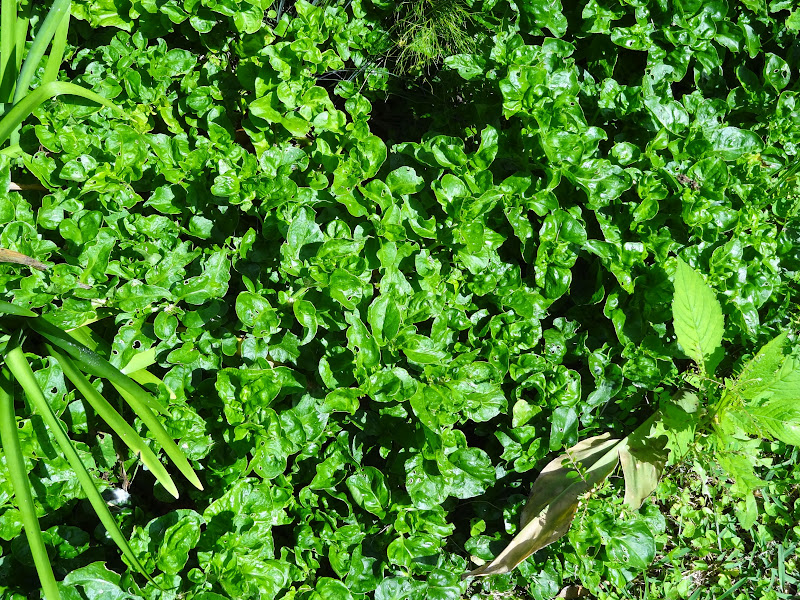
Warrigal Greens


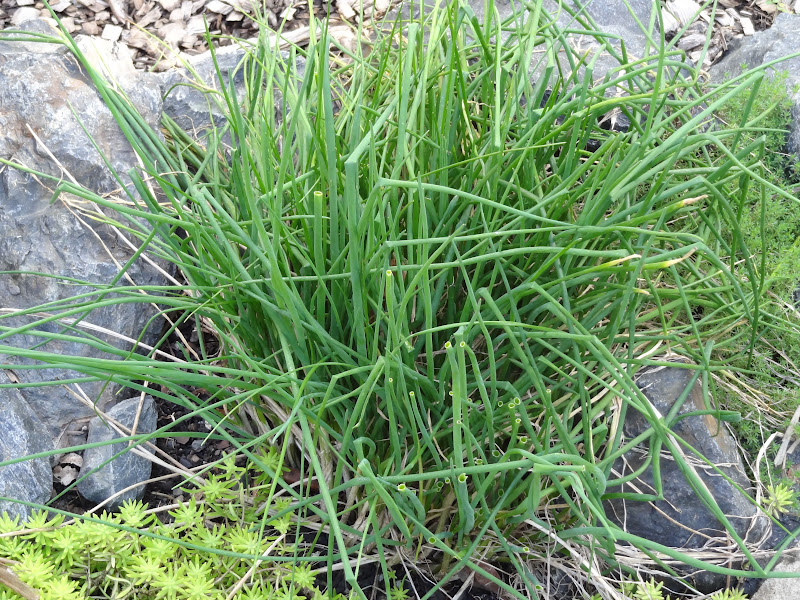
Chives


Pumpkin varieties


Rhubarb

Cassava

Custard Apple


Wing Bean


Loofah

Carambola

Mulberry


Tamarillo

Rosella (Australian hybrid)

Yam Bean climbing Macadamia Tree


Sweet Leaf


Kang Kong & Variegated Water Parsley (Oenanthe Javanica)

Brazilian Spinach


Red Amaranth with green Egyptian Spinach

Golden Brugmansia flower with Bunchosia (Peanut Butter Fruit)  fruit below


Perennial Capsicum

Mushroom Plant (Rungia klossii)
Large Leaf Rocket

West Indian Gherkin

Red Russian Kale Seedlings


Chilacayote
Yellow Guava, seeded by birds, very lemony


Yam Bean (The bean itself is poisonous. We eat the yam)

Sword Bean


Jak Fruit


Australian Sweet Lime


LinkWithin


Related Posts Plugin for WordPress, Blogger...

LinkWithin

Related Posts Plugin for WordPress, Blogger...