Click on a pic to see all the pics in full screen.
We first called at the
'planet dorrigo' mountaintop nursery at 163 Maynard Plains Road, Dorrigo. www.theplantsource.com.au
 |
| Steve answers our questions. |
Here Steve Sutton has some beautiful plants at excellent prices in arguably one of the most scenic settings for a nursery in Australia. Most of us were interested in the plants that would survive in our coastal conditions but of course Steve also stocked plants for his locality, plants that tolerate frosts and sleet. We came away with a
leucothoe plant, with gold variegated leaves, some abelias with dark red autumnal tones and a new salvia to add to the collection of bee attracting plants.
On arrival at Michael and Jodie's house we were again impressed by the setting.
In eighteen months they have created a flourishing vegetable garden well serviced by chook tractors. Here is how Michael and Jodi describe their garden.
"Our garden is quite young (about 18 months) but we have managed to be reasonably prolific in that time! The main part of the garden is vegetables (annual and perennial) in contoured beds. These are very close to the house thus should be fine for access. We also use chickens/ducks/geese rotated through some of the garden beds in a bird netted area and have the hothouse/seedling area. We also have goats (great for manure close at hand), Dexter cattle, alpacas and a horse.
 |
| View from Michael and Jodi's front door |
Slightly further on we have an orchard that we are establishing below the house (this is a steeper walk to get up and down to), an area of large tobacco trees that we are experimenting with using to nurse-maid some sub tropical trees to develop a "food forest". The garden is constantly expanding as we are in the process of expanding to market gardening to sell a mixture of produce. Overall a mix of "a beautiful mess" and more conventional row style gardening!
The greenhouse is essential because of the cold tablelands climate.
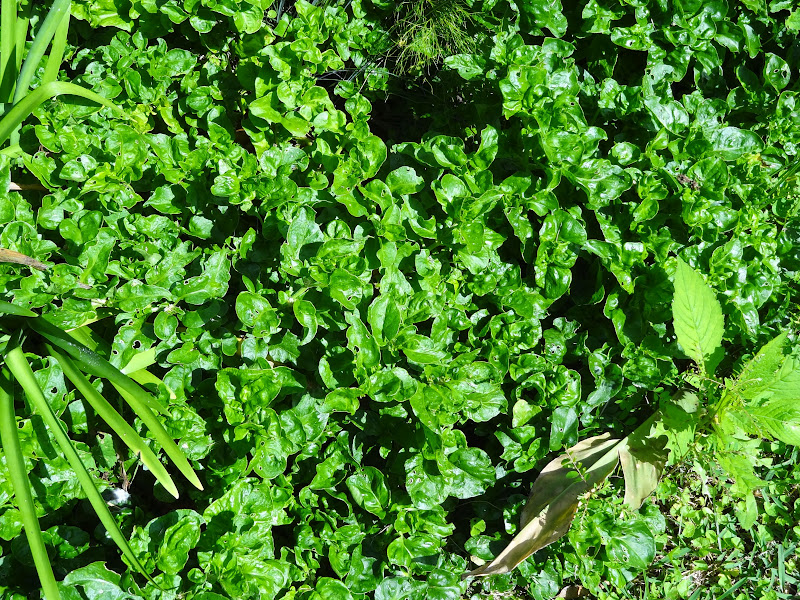
Growing Chinese Waterchestnut in a container prevents this plant from becoming a water weed and makes harvesting much easier.
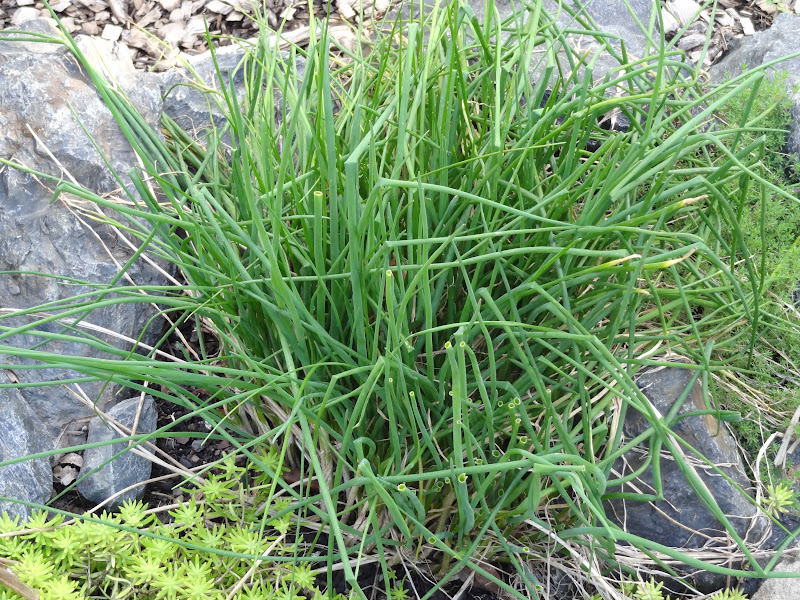
Parsley is flourishing on the tableland but is struggling in the coastal humidity.
 |
| Kang Kong grows well in the balmy summer but will soon succumb to frost. |
 |
| Michael and Jodi have restored this chaff cutter to cut mulch. |
This fence of mixed berries is temporary. They will soon be transplanted to another area.
Jodie has imported a blocking tool that presses out a peat moss mix. Each block, large or small, becomes an individual seedbed and the plants can be transplanted with minimum disturbance of the roots.
This is the large blocking tool.
Read more.
This chook dome is used to clear a patch of grass before planting.
A bed of asparagus and nasturtium is surrounded by rows of comfrey. Fertilising the asparagus with comfrey and nasturtium is therefore convenient.
Globe artichokes love the climate.
These yam bean dipping sticks were cut from the large yam bean below.
This huge yam from a yam bean may have grown over two summers. Unlike potato or apple it will not quickly oxidise when cut and exposed to the air.
Nell's pineapple butter tarts were delicious.
These tasty kofta burgers were a savoury treat.

A yummy pumpkin and polenta cake. We certainly have a glut of pumpkins this season.
This moist gluten free date cake was also a hit.

These
jelly palm fruits were thirst-quenching and the seed was then available for planting.