About Bellingen Seedsavers

We are a group of like-minded growers of edible and useful heritage plant varieties in the Bellingen area of northeast New South Wales, Australia.

Our climate varies from frost-free coastal areas to inland river valleys and highlands with frosts. Bellingen has an average annual rainfall of 1507ml.

Showing posts with label Star Gooseberry. Show all posts

Sunday, 2 June 2013

Bellingen Seed Savers Garden Visit to Fernmount, June 2,


Our June 2 visit to a Fernmount (near Bellingen) garden showed the early ravages of our mild Autumn. Quite a few deciduous trees (Pecan Nut, Pomegranate) had lost most of their leaves. The citrus, however, were madly fruiting.

We viewed a Yam Bean plant then dug the tuber for afternoon tea. The bean seeds are poisonous but the tuber is cool and refreshing. Best of all we can all grow it in the mild climate.  We could see the actual inedible Yam Bean seeds on the vine. The seeds are soaked to double in size before planting in Spring.

Inedible bean of the Yam Bean


Afternoon tea is over and all that remains of the freshly dug Yam Bean are two slices. The cut Yam Bean was a hit as a stick for dips. The verdict was that the taste was refreshing. Yea for a healthy dip stick!


On the bench is another whole Yam Bean. The strips of skin peel off easily with a knife.


Here are some of the plants still fruiting in the food forest/orchard. Also shown are some of the plants we are hoping will fruit on a north facing slope but in this less than tropical climate.


An Australian Sweet Lime hybrid does very well .


This Bilimbi tree has yet to fruit. It is a pretty tree but will lose its leaves from the cold wind.


The Carambola (Star Fruit) has fruited generously.  This seedling plant seems less susceptible to a rust than the parent plant.


Dried edible Hibiscus pods in front of lush Cassava leaves.


The Coffee beans yet to ripen.We must watch the birds do not spread the seed. Apparently a handful of seeds makes a cup of coffee and the seeds can be roasted in a bench top popcorn machine.


Cumquats are delicious.


The Dragon Fruit has yet to fruit but grows well.


Giant Russian Cucumbers, a mild tasting variety that grows well in this climate. This is a third generation seed grown in this garden.


Golden Grumichama (or Black Grumichama) makes an excellent hedge. The fruit are cherry sized and very sweet.


This Kale just keeps growing.

 The Lemonade is covered in fruit.

Loofah


The Loofah vine is loaded with fruit to be processed to make scrubbers. The small fruit are edible losing their rank odour when cooked like a zucchini.


Mandarins are always popular.


Mexican Weeping Bamboo is perfect for stabilising the bank of the dam.


Meyer Lemons are not terribly productive in this location.
 Pecan Nut pods amid their autumn leaves.


A pomelo is yet to ripen.


This Purple Podded Pea  is not as half as productive as Snow Peas in this climate but it does produce podded peas.


This Soursop loses leaves over Winter but is still growing well in Summer. It is yet to fruit.


Sprouting garlic

Garlic grows well in a pot.


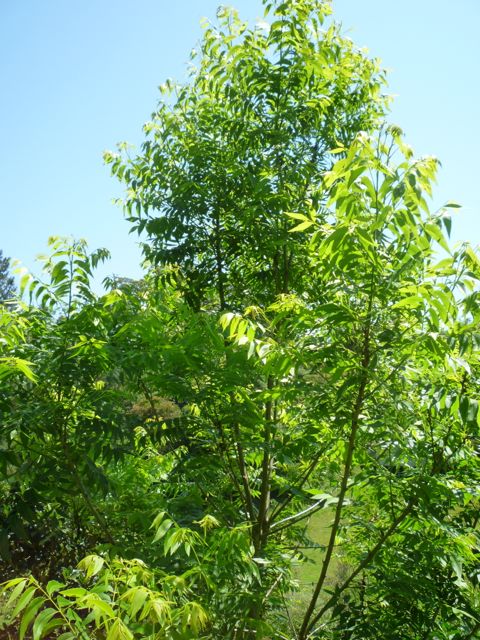
This Star Gooseberry  (an Asian fruit) is yet to fruit.

 Unripe Macadamia Nuts hang from the tree.


A mix of Sweet and Lemon Basil grows well in the raised bed.


Our Tamarillos are still fruiting but no longer flowering.


Tangerines grow as well as the other citrus.


This Thornless Blackberry produced a few sweet fruit this season.  The fruit is not always very sweet.


This Tropical Apricot is growing strongly. We hope it fruits.


A mixed bed with Tumeric and edible Ginger.


Villa Franca lemon

 This White Guava is sweet with a slight trace of lemon. At this time of year it is fruit fly free.


White Mugwort, a useful herb to add to the nests of the chickens and to their drinking water to kill parasites.


We hope this Wild Herbert Cherry (an Australian native from the tropics) will thrive in this climate.


We have a glut of pumpkins but are learning to use them in curries, vegetable chili con carne, cakes, soups etc. They do not go to waste.


Monday, 21 November 2011

Snapshot: November Edibles in northern NSW, Australia

It is mid spring in our November gardens. In this climate, on this north facing block, it is early summer. Click on any pic to enlarge.

The taro is in full leaf and grew throughout our mild winter. 


Pink Brugmansia in front of Arundo Donax. The Arundo is useful as a source of mulch.


This Wax Jambu has just burst into flower. The fruit are crisp and moist.


A thorny Globe Artichoke has been left to flower but is delicious eating.


This Rose Apple was planted during winter under a wattle that will soon 'kick the bucket'. It has yet to start new growth.


A Tamarillo (Solanum betaceum (syn. Cyphomandra betacea) has already yielded a few fruit, its first crop. As yet Fruit Fly has not attacked this fruit and the plants are very productive in this Bellingen climate.


  This Mangosteen was planted in autumn in a swampy part of a north facing slope. So far it likes its position but has not yet put on growth.

 The choko vine is beginning to cover the poultry fence.
 The White Mulberry has been fruiting for a few weeks. Birds have not yet recognised the ripe fruit (white to pale green) as ripe and have left the fruit for us. The flavour is extremely sweet and many prefer the black, common mulberry for taste.
 Two Burdekin Plum trees (Pleiogynium timorense)
 are growing strongly. Native to Australia the fruit requires treatment to increase palatability.

 Natal Plum (Carissa macrocarpa) is starting to flower for the first time. These plants were planted two years ago. The white flowers (like a small Gardenia flower) have a sweet smell. The plant is neat and very prickly.

This Fuju Persimmon is growing strongly again after dropping its leaves over winter.


A tropical peach looking quite miserable. Tip borer attacks this tree each year and prunes it. The Lomandra grass behind the tree is to edge the terrace.


 Two Davidson Plums grow strongly.


An apricot has yet to flower despite its growth.

A Grumichama yielded a few fruit last year. They grow well in this climate.


This Longan tree finds the soil dry and poor despite its heavy mulch. The pine trees above it rob the soil of nutrients. Another location is required.


 This Star Gooseberry (Phyllanthus acidus), is also known as the Otaheite gooseberry, Malay gooseberry and Tahitian gooseberry. It has the same name as Sweetleaf, (Sauropus androgynus) which is confusing. This tropical plant has struggled with our mild winter and is only starting to regain its leaves. Perhaps it will last the next winter with leaves because of its growth. The Gota Kulu herb has almost swamped this plant.


Pecans grow strongly in this climate


This native lime bush produced many fruit last summer.


A young Rosella will need every warm day to produce its fruit. The fruit is excellent for jam making.


This 2.5m Black Sapote is growing strongly and may fruit this year.
 A variety of edible figs survive this wet climate and produce fruit.
  A Cavendish banana in fruit.


A Soursop regains its leaves after the winter defoliation and dieback that affects many tropical trees in our winter. 


The Peanut Butter tree (Bunchosia) likes its warm wall and has produced a few fruit.


This Myrtus ugni is growing reasonably quickly but is yet to fruit.


The Mushroom plant is in flower.


Vetiver grass retains this steep slope and is also cut for mulch.


Day lily flower buds can be added to stirfries.


This yellow guava produces small, sweet fruit.


The variegated water parsley loves the edge of the pond and tastes like parsley.


The Kang Kong has survived the winter cold and is starting to grow across this pond.


I still find the leaves of this Brazilian Spinach very leather, but it is useful as a summer salad green.


This annual Amaranth does produce some mild tasting salad leaves.


 Oca (Oxalis tuberosa) growing from a yam purchased from a local store in winter.

Close up of a Cape Gooseberry bush. If you look carefully you can see an immature fruit in its green casing (cape) which unfortunately do not protect the fruit from birds or Fruit Fly. Still this plant is extremely productive and delicious stewed with only a little sugar. "Native to high-altitude, tropical Colombia, Chile, Ecuador and Peru, where the fruits grow wild, physalis is casually eaten and occasionally sold in markets." Wikipedia.

The Boysenberries are fruiting heavily. These plants were established in late summer last year and the boysenberries have swamped the Youngberry and Raspberry also growing on the trellis. So far the birds are leaving plenty for us.


This sharp thorned Kei Apple is yet to fruit. To persuade me tokeep these two plants (hopefully one male and one female) the fruit will need to be superb because this plant is an eye hazard.


LinkWithin


Related Posts Plugin for WordPress, Blogger...

LinkWithin

Related Posts Plugin for WordPress, Blogger...