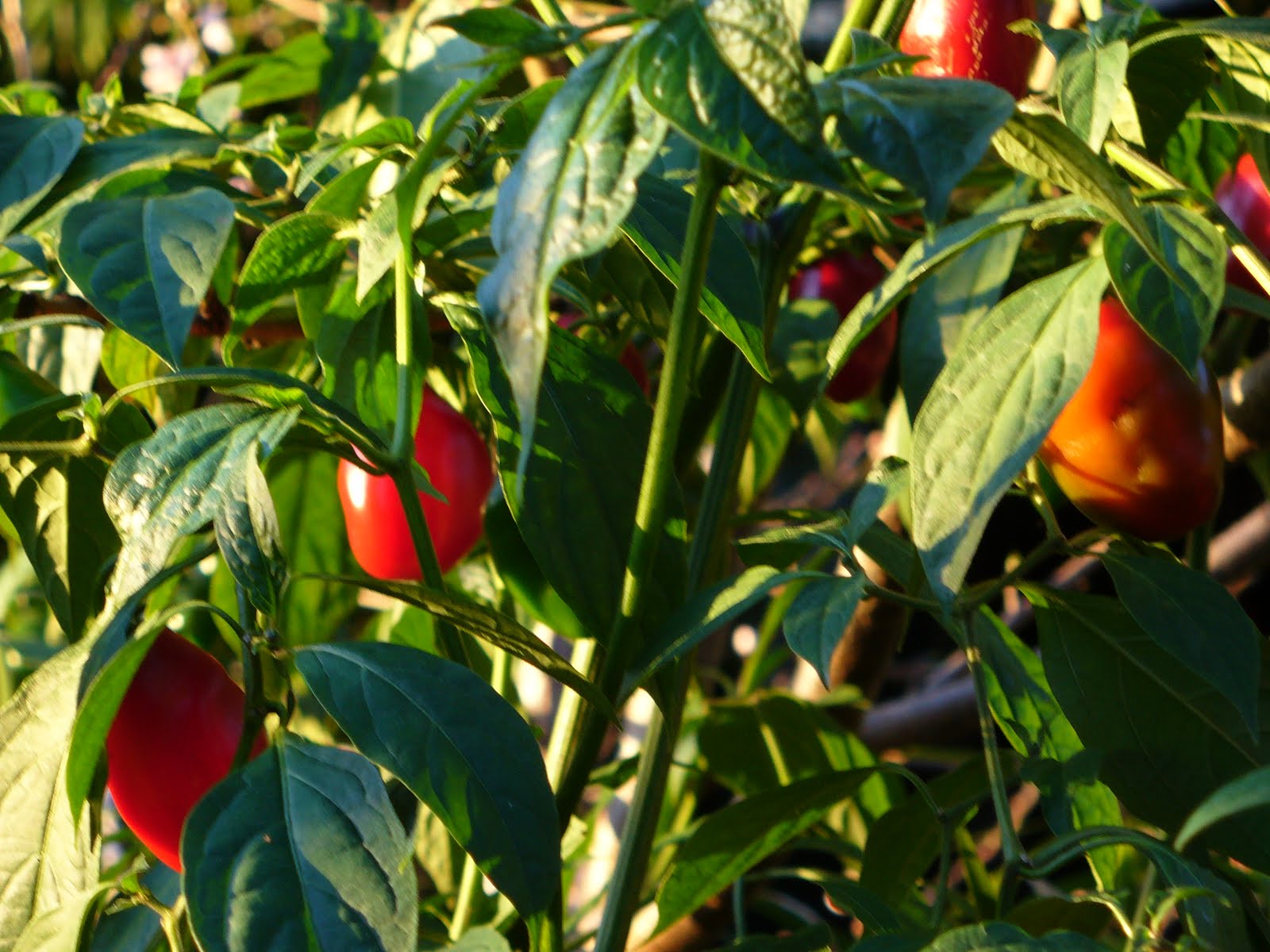
About Bellingen Seedsavers

We are a group of like-minded growers of edible and useful heritage plant varieties in the Bellingen area of northeast New South Wales, Australia.

Our climate varies from frost-free coastal areas to inland river valleys and highlands with frosts. Bellingen has an average annual rainfall of 1507ml.

Wednesday, 28 September 2011

Next Gathering:

Thursday 6 October 1pm  
Coronation Street, Bellingen

This will be a lovely place to spend a Spring afternoon.  This mature garden is delightful and quite different from any that we have been to before.  The extensive use of pavings with a huge raised and netted herb and vegetable bed, surrounded by densely planted borders, makes for a low maintenance, creative garden.  There is a lot to learn in this garden and I hope you can come and enjoy it.  One of the delights is the sound of the water feature.

Please let me know if you can be there.  It is very helpful to our host to have a reasonable idea of how many people to expect.  I will send the address and let you know of anything you need to bring.

Cheers
Irene

Thursday, 22 September 2011

Jude and Michel Fanton visit Bellingen Seedsavers

Once again we visited David's large garden which he most generously allowed as the venue for a Jude and Michel Fanton Seedsavers Workshop. Jude and Michel founded the international seedsavers movement which is headquartered in Byron Bay, NSW.


One activity involved finding the most perfect pea pod to save for seed.


Under the shade of the trees, on an unusually hot spring day, Jude and Michel explained many of the mysteries of seedsaving.


The workshop finished with the group learning how to clean seeds using various sieves.


We all brought along seeds and plants for a 'show and tell' session. As usual, Nell was a fount of knowledge. Here she is describing the excellent properties of a Fijian Taro that she has grown for many years. We also learned that the shoots from Arrowroot (Canna edulis) can be eaten when prepared like asparagus.


Nell mixes the cooked Taro with coconut milk to make a tasty dip or spread.


Much of the food brought along to share was grown by members of our Bellingen Seedsavers Club. Lemons, peanuts, mandarins, paw paw, grated green paw paw and bean shoots were just some of the home grown edibles used in cakes, salads and dips.


Peter brought along his pickled walnuts and they were indeed exceptional. Here they are served with crackers and cheese. His large tree is around ten metres high.


The chilacayote (Cucurbita ficifolia) the melon-like fruit, was new to many of us. Like a pie melon, this fruit is probably best used as a zucchini when small, according to our experienced members. The flesh was white and slightly sweet. You need never starve with 'killer chayotes' in the trees. Just watch your head if you allow them to grow high into the trees.


Colourful nasturtium flowers decorated this salad.


Nell  made this salad with grated green paw paw and sprouts with a lemon-juice and honey dressing.

Tuesday, 16 August 2011

August Newsletter

Hi Seed Savers

First of all I am delighted to tell you that Michel and Jude Fanton, the Founders of the Seedsavers' Network, have accepted our invitation to present a workshop in Bellingen. This is quite a rare opportunity and I do hope you will be able to participate. I have approached them before but they are frequently  travelling overseas but this time  I managed to catch them at the right time.

We still have a few details to finalise but I can say that they will be here on the week-end of 17 & 18 September.  They will present a one-day workshop in Gleniffer on the Sunday and this will be preceded by a film screening and Q&A /catching up with the locals session at the CWA hall from about 4.30 or 5 to 7pm on Saturday 17th.
            
*If there is anyone with some time and has skills with posters and banners, I would be delighted to hear from you.  I'm suffering from event overload!                    

The Fantons have such a lot of knowledge and stories to share and they are a delightful couple.  You can see them in action, if your internet speed is up to it,  on their latest video postings on youtube.com/seedsavers, also facebook.com/seedsaversnetwork  Also visit their website at www.seedsavers.net/

The cost of the workshop will be kept at a very reasonable level and we are just working on the final details, which will be sent to you shortly.  It is the requirement of Michel and Jude that a minimum of twenty people attend the workshop and we will need to receive a minimum of fifteen registrations by two weeks before the event (3 September).   More details soon - put it in your diary.

Gathering at North Bank Community Garden 4 August
A happy mix of long term and new seed savers gathered on a beautiful day.  Thank you all for being there and special thanks for the seed and plant contributions .  The gardens look fantastic - every week brings more plants, more improvements  in the layout,design and innovation - see John Vernon's report and photos on the blog http://bellingenseedsaversunderground.blogspot.com/ .  We were even filmed on the day by a young woman from Victoria who is making a documentary and I will let you know if and when I hear more about it.  

Thank you so much to everyone who has delivered pots and containers to NBCG, to replace those stolen along with their ute.  There was a great fundraiser on Saturday and I hope they raised lots of money for a new ute.  We enjoyed some great music and the very tasty food being served and I understand that there will shortly be an expansion in the size of the kitchen.

Important Info. about Sword Bean from Carole Helman
"You may have taken some of the big pink Sword Bean seeds from our recent Gathering at David's.  My notes on the day, with the seeds, said we use the very young green pods, sliced finely, as 'green beans'.  We DON'T ever use them with developing seeds in them and an old, but very informative, book indicates that the ripe seeds probably shouldn't be eaten. (Reference: 'Tropical Crops' - Dicotyledonsby J.W. Purseglov, 19680.


Upcoming Events:

Working Bee Thursday 18 August 1pm, Bellingen
A few of us will be at Laurie's to pack seeds for the upcoming Plant Fair.  If you would like to join us or if you have some seeds or plants to contribute, please let me know as I need to have labels prepared for the packets and signs.  If you just have time to drop in for a chat, we will be pleased to see you.  If you let me know you might do this, and you haven't been to Laurie's before, I will give you the address.

Energy Festival at the Showgrounds Saturday 3 September
Bellingen Seed Savers will share the Transition Bellingen site this year, rather than having a separate stall.  The reason for this is that we will have the Plant Fair the following week-end and don't want to overstretch our resources - human and edible.  I have committed to being there and, if there is anyone who will be at the Energy Festival who would like to join me for a while, that would be nice.  I will just set up a display of posters, photos and information.  It will be a good opportunity also to promote the Fantons' events two weeks later.

Spring Plant Fair at Market Park Saturday 10 September 8am to 2pm
Please let me know if you are able to make a contribution to the preparations for our stall, either in the lead-up or on the day.  It is always a very busy and interesting day but we do need sufficient volunteers to help us survive it in good spirits.  This is our main way of fundraising  through donations for seeds and plants and raffle ticket sales.  This enables us to cover our expenses for all the various materials we need and events.  It's also a lot of fun.  It would be helpful if I can draw up the roster for the day quite soon.
We need people to: 
*Prepare signs, banners, etc.
*Help set up, take down and put up the various displays ready for the early browsers. We usually start at about 6.30am.
*Work on the stall with others and enjoy meeting interesting people of like minds.We usually have a lot of plants in pots as well as seeds and information to hand out and raffle tickets to sell. We do need several people there at any one time during the morning at least.  If you have already told me that you can help - please remind me.

The Fanton Events at CWA Hall Saturday 17th, Workshop in Glennifer Sunday 18th.  Watch this space!

Best wishes everyone - I'm really looking forward to seeing a lot of you throughout August/September.

Gathering Thursday 6th October
Gathering November Thursday 3 
Please consider hosting one of these at your place.  The more variety of gardens and areas we visit, the more interesting it becomes.  Whether your garden is new or long-established, large or small, in valley or heights.  It certainly doesn't need to be perfect.  It's such a good way for us all to share the joys and heartaches that we experience out there - and to learn from one another.

Cheers
Irene


Friday, 5 August 2011

Seed Savers Visit to Bellingen North Bank Community Garden in August

Midday temperatures hovered around 20 degrees centigrade as we enjoyed another perfect late winter day on our visit to the North Bank Community Garden. This garden has four directors and operates on a voluntary basis. Volunteers help grow the vegetables and fruit and also share the produce. This community garden also hosts a 'for profit' seedling supply business. The garden has planted public gardens and fruit trees around Bellingen and is involved with the sharing of locally grown food. It is auspicing another community garden at Valla and another proposed garden at Brierfield.


 (Click on any photo to enlarge.)


Kohl Rabi is being harvested in the garden. This plant will soon be ready for harvesting.


 This bed of lettuces is waiting to be thinned.


A plentiful harvest of bottle gourds is drying in the open.


New beds are being carved into the rich soil. Loads of stable manure are being trucked in. Many of the gardens are designed in this free flowing design.


A huge tatsoi awaiting harvest.


One of the last cauliflowers is almost ready for picking.


The seedling production area is supplying local businesses as far west as Dorrigo. It therefore grows a range of seedlings, some suited to frosty areas and some suited to the lowland heat and humidity.


 Jess (left) is one of the directors and operates the seedling supply business.


New solar panels, courtesy of Bellingen Solar, have been erected in the ever-growing garden. The garden has plans to landscape the riverbank and extend the orchard.


 Is this a bed of leeks?

Members were able to collect rooted sections of Lemon Grass. Some of us had been sold Citronella Grass by nurseries. The Citronella grass is unsuitable for eating and can become weedy.


The community pizza oven and barbecue is well used.


 An arch of split and bound bamboo frames the view.


Mustard has self seeded around the garden, here growing under the ginger. The 'chooks' welcome the green feed produced by the garden.


The 'seed savers' gather to share seeds, ideas and food.  We shared many seeds. New seeds added to the seed collection included Thai Egg Tomato, climbing beans, Pie Melon and Linseed. We also shared seedlings of Irene's Bok Choy and Drumstick Tree (Moringa oleifera) cuttings.


Carol enjoys a local pecan nut. The platter has Carambola and citrus grown by David.


Tuesday, 19 July 2011

Local Food Film Festival 2011 Short Film Competition

The Local Food Film Festival 2011 is calling for entries into its first short film competition. With $1,000 in prize money, the winning film will be screened at the annual Festival in October and published online.
This years’ theme is ‘Growing and eating for the future’ with each film showing or having a connection to locally grown and produced food. 
Films can be up to 8 minutes, there is no entry fee and submissions will be accepted until Friday 30th September 2011. 
All people are invited to enter the short film competition, regardless of background or level of experience- primary/high school, local community groups, established filmmakers or anyone passionate about local food. 
For entry guidelines please visit www.localfoodfilmfestival.com.au 
The Local Food Film Festival 2011 will be held at Bellingen Memorial Hall on 22nd October, Bowraville Theatre 29th October and Bunker Cartoon Gallery 30th October.
Two feature films will be shown; ‘Vanishing of the Bees’ and ‘Economics of Happiness’, as well as a number of short films including the winning entry in the short film competition. 
The Local Food Film Festival 2011 is supported by the Coffs Coast Local Food Alliance and NSW Environmental Trust. For more details about the Festival, please visit www.localfoodfilmfestival.com.au or get in touch at info@localfoodfilmfestival.com.au 
Mid North Coast, NSW: 16 July 2011
Media Contact:
Jocelyn Edge  0423 595 736

Friday, 8 July 2011

Bellingen Seed Savers Visit David's Delightful Garden


David suggested we visit his small acreage to advise him on garden plantings and layout. As we suspected David had little need for our advice but we thoroughly enjoyed his sustainable plantings that are rapidly meeting his goal of developing a small but productive Eden.


David's productive garden commences at the top of his gently sloping block

David has made great use of bamboo and drapes bird netting over his 'chook pen'.
Unfortunately the hawks have been active.


His 'chook pen' serves as a trellis for his recently planted broad beans His hens have a magnificent view of the escarpment. While the south of the NSW suffered from snow and wind storms on this day, the Gleniffer Valley near Bellingen had a clear blue sky and 19 degree Celsius temperatures


Irene calls us to order and we share our Seed savers philosophy with jounalist visitor Uta. We endeavour to grow seeds and then to ensure they are distributed throughout our membership. Heritage seeds from acclimatised vegetables and fruits will always be growing somewhere in our district. If seed companies attempt to patent the seeds of common food plants and to introduce genetically modified plants we will still have seed stock available to share. Of course, our acclimatised plants grow best in our district.


Ute's photograph of our happy group appeared in the Coffs Coast Advocate

Our seed table is a treasury of locally grown seed, some grown for many generations in this district. The very hot rocoto tree chilis in the bags were taken for chili jams, seeds and to be dried for chili powder. The powder is used in cooking and for medicinal capsules to relieve arthritis. Great idea Jeff.


Jicama (Yam Bean) is new to most of us but Nell says to harvest the tuber as soon as the flowers fade. The tuber or root has more of a mild bean taste. This plant was left to grow for seed and the tuber was huge. These Jicama dipping sticks were the result. Nell says she uses her Jicama and her Yacon to provide the crunch in stir fries as an alternative to 'hard to peel' water chestnuts.


Beryl's lemon butter tarts, made only from organic ingredients (lemons, sugar, butter) were popular at afternoon tea along with Jicama sticks, mandarin cake, banana cake and various slices made from local ingredients. Despite appearances, however, we gather not for the food but to share our seeds, our values and friendship. It works for us. Come along to the next meeting if you live locally and share your seeds or plants.

Seed Savers' Network Aims

Our Aims

The Seed Savers' Network was established in Australia in 1986 with these charitable and educational purposes in its deeds:-

To develop and promote:

  • Educational programmes for the preservation of open-pollinated (non-hybrid) seeds and the genetic diversity of plant varieties;
  • Non-profit seed exchange programmes;
  • Agricultural and horticultural programmes with particular emphasis on the propagation of open-pollinated plant varieties;
  • Preservation gardens for open-pollinated plant varieties;
  • Seed banks for non-hybrid plant varieties;
  • Scientific research relating to the above matters, either alone or in conjunction with a public university or other institution.

To Provide:

  • Financial and educational assistance to community development projects - local and overseas;
  • Open-pollinated seed stock to individuals, groups and communities.
from the  Seed Savers Network


Bellingen Seed Savers gather to share seeds, July 2011

Tuesday, 5 July 2011

Growing in a Seed Saver's Garden near Bellingen in Late June/Early July

We have had no frosts as yet and the the winter is mild.


Brazilian Spinach (Alternantera sissoo) is still producing edible leaves in the sun although the plants in the shade look miserable.


This tree chili or rocoto chili just grows away in this weather and produces chilis throughout the winter. It also grows easily from seed.


A Jicama vine grows up into a young macadamia and the apple (root) probably needs harvesting. This is useful grated into salads. It does not turn brown like a potato or Yacon once peeled.


This Star Apple (Chrysopyhllum cainito) has lost a branch in each of its two previous winters in this garden. It may be old enough to survive the cold this year. The leaves are most attractive with the brown furry underside.


A lone and small Acerola fruit lingers. The best fruiting was during late summer.


Bacopa monniera (Memory Herb) loves the shade and wet conditions

Cape Gooseberry (Physalis peruviana) cases yet to dry out so the fruit is still green inside the case. The cases seem to drop and disappear as they ripen so it is a daily task to pick the ripe fruit. I am not sure yet that it is worth it.


An artichoke regrows after being cut back.  Quite a few of the seed grown artichokes were too prickly to bother with. I think this one was relatively spine free.


This nectarine is just coming into flower. I suppose our winter corresponds to its native spring. Birds, bats and fruit fly consumed most of last years crop.


Galangal thrives in part shade and evening sun. I have yet to dig and use this plant.


Two pics of a lone fruit on a Peanut Butter (Bunchosia) Fruit tree. This is more of a shrub at the moment and the fruit is smaller than the egg sized fruit I was expecting. It tastes sweetish and the texture is peanut butter like. 


Perhaps as this tree ages the fruit will increase in size. I'm hoping!!


Mushroom plant (Rungia klossii ) thrives in shade with plenty of water as long as it is not too cold. There is plenty still growing to add to stir fries, soups and stews, even sandwiches, for a mushroom flavour and protein. The red stems belong to an amaranth that is still lingering.

Enjoy
John


Sunday, 26 June 2011

Growing Vegetables and using Bamboo; Ideas from Japan

We thought folk might be interested in how vegetables are still grown by many semi-urban and rural Japanese. Carol and I took a few photos as we explored Kyoto, Takayama, Hiroshima and Osaka by rail and bus. Don't forget a double click enlarges the photo.


This sign did catch the eye and seemed most appropriate for the Bellingen Seed Savers blog. In reality this shop was selling clothing.

 We were visiting in early to mid June and the weather was very hot and steamy, just like a NSW Mid North Coast summer but following the very cold Japanese winter. Many of these gardens were in a rural village in the mountains surrounded by still snowy peaks. Black plastic was commonly used to warm the soil for some crops and to suppress weeds. Interesting to see here the use of recycled plastic stakes in a land that has made the use of bamboo an art.


Japanese cities merge into villages with rice fields and vegetable gardens. Only the hilly and mountainous ground remains uncultivated. Note the onion tops bent over to ripen the onions before harvesting.


I think these might be tree onions.


Another vegetable garden seen from the train between Kyoto and Takayama. These gardens were alongside the tracks in the river valleys.


I suspect these are cucumbers, started with black plastic to warm the soil. Outside Takayama we visited a 'traditional' village where we could get close up to many more vegetable gardens.


I would never have thought of growing a potato patch with black plastic but these plants seemed to be flourishing.


These are climbing beans, still out of season when we visited.  However, we ate soybeans in tempura (delicious) and salads and drank lots of soy milk in coffee (not so delicious). Maybe soy beans would be a useful crop in our gardens as well?


Beans, tomatoes, eggplants and capsicums. The netting was commonly used to grow beans.


Why not grow a raft of water-loving vegetables or herbs on our ponds? This raft also sheltered the fish.


We could also grow a grapevine in a pot on the terrace. It might be easier to protect the fruit from the birds on a plant in a pot.


Ancient pomegranate trees, pruned and shaped for beauty over many years, were still producing fruit. It was rare to see a tree in a garden that had not been heavily pruned and shaped and sometimes supported. This allowed a dense planting in ornamental gardens.


An ancient plum tree orchard at the Shukkeien Garden, in this case the plum trees are grown more for the flowers in Spring rather than the fruit. Note the support for an ancient branch trained for a weeping effect.


When you see the meticulous pruning of the branch tips to induce a 'cloud pruning' effect it is easy to understand the time and care the Japanese expend on their trees. It might take a few days to prune a pine tree this size. You can clearly see the technique removes the growing green tip and leaves a smaller twig now inclined to branch and to grow densely and horizontally rather than vertically.


In the Bellingen area we often grow bamboo to use around the house and yard. Here are a few ways the Japanese use bamboo. It is used extensively, in this case to retain a bank.


Bamboo makes a useful barrier.......


.... or fence, here a lattice attached to pine poles. The lattice is screwed or wired to the poles  and the black cord is tied over the screw to achieve a more authentic effect.


Here the bamboo is used to contain the bushy tips of the plant to achieve a brush effect. There is also a small gate inserted to allow access to this bamboo grove on the outskirts of Kyoto.


Here the bamboo lathes are used cleverly to disguise a PVC pipe emptying storm water into a garden drain.


Larger bamboo poles make a comfortable seat when tied to a steel frame.


This gate is more decorative than useful but the design could easily be adapted to achieve a gate more resistant to livestock.


If you are growing Camelia Chinensis (tea) at home, the bushes do thrive in our climate, then you may be interested in this small tea garden in the larger Shukkeien Garden in Hiroshima. The bushes are kept to waist height. Small tea gardens, this size, were seen attached to many houses on the outskirts of the cities and towns. I think I will be taking cuttings from my bush and planting out more to achieve at least a row of bushes. I grew to enjoy the green tea easily made from the tips of the bush.


A miniature rice paddy with irises grown for effect in the same garden.

All this pruning, shaping of trees and the use of bamboo adds up to a truly beautiful garden. The Shukkeien Garden is now restored to its full glory. The buildings and vegetation were restored after the A-bombing of Hiroshima.


Camphor Laurel trees are treasured in Japan and used extensively. They are constantly pruned to manage their growth and to create a cloud effect but I doubt their fruits are a problem to the native bush in Japan. These trees (below) grow around the A-bomb dome in Hiroshima, a sacred site for many. Folk in Bellingen, with its controversial Camphor Laurel trees, may be particularly interested in this photo.


LinkWithin


Related Posts Plugin for WordPress, Blogger...

LinkWithin

Related Posts Plugin for WordPress, Blogger...