About Bellingen Seedsavers

We are a group of like-minded growers of edible and useful heritage plant varieties in the Bellingen area of northeast New South Wales, Australia.

Our climate varies from frost-free coastal areas to inland river valleys and highlands with frosts. Bellingen has an average annual rainfall of 1507ml.

Tuesday, 19 July 2011

Local Food Film Festival 2011 Short Film Competition

The Local Food Film Festival 2011 is calling for entries into its first short film competition. With $1,000 in prize money, the winning film will be screened at the annual Festival in October and published online.
This years’ theme is ‘Growing and eating for the future’ with each film showing or having a connection to locally grown and produced food. 
Films can be up to 8 minutes, there is no entry fee and submissions will be accepted until Friday 30th September 2011. 
All people are invited to enter the short film competition, regardless of background or level of experience- primary/high school, local community groups, established filmmakers or anyone passionate about local food. 
For entry guidelines please visit www.localfoodfilmfestival.com.au 
The Local Food Film Festival 2011 will be held at Bellingen Memorial Hall on 22nd October, Bowraville Theatre 29th October and Bunker Cartoon Gallery 30th October.
Two feature films will be shown; ‘Vanishing of the Bees’ and ‘Economics of Happiness’, as well as a number of short films including the winning entry in the short film competition. 
The Local Food Film Festival 2011 is supported by the Coffs Coast Local Food Alliance and NSW Environmental Trust. For more details about the Festival, please visit www.localfoodfilmfestival.com.au or get in touch at info@localfoodfilmfestival.com.au 
Mid North Coast, NSW: 16 July 2011
Media Contact:
Jocelyn Edge  0423 595 736

Friday, 8 July 2011

Bellingen Seed Savers Visit David's Delightful Garden


David suggested we visit his small acreage to advise him on garden plantings and layout. As we suspected David had little need for our advice but we thoroughly enjoyed his sustainable plantings that are rapidly meeting his goal of developing a small but productive Eden.


David's productive garden commences at the top of his gently sloping block

David has made great use of bamboo and drapes bird netting over his 'chook pen'.
Unfortunately the hawks have been active.


His 'chook pen' serves as a trellis for his recently planted broad beans His hens have a magnificent view of the escarpment. While the south of the NSW suffered from snow and wind storms on this day, the Gleniffer Valley near Bellingen had a clear blue sky and 19 degree Celsius temperatures


Irene calls us to order and we share our Seed savers philosophy with jounalist visitor Uta. We endeavour to grow seeds and then to ensure they are distributed throughout our membership. Heritage seeds from acclimatised vegetables and fruits will always be growing somewhere in our district. If seed companies attempt to patent the seeds of common food plants and to introduce genetically modified plants we will still have seed stock available to share. Of course, our acclimatised plants grow best in our district.


Ute's photograph of our happy group appeared in the Coffs Coast Advocate

Our seed table is a treasury of locally grown seed, some grown for many generations in this district. The very hot rocoto tree chilis in the bags were taken for chili jams, seeds and to be dried for chili powder. The powder is used in cooking and for medicinal capsules to relieve arthritis. Great idea Jeff.


Jicama (Yam Bean) is new to most of us but Nell says to harvest the tuber as soon as the flowers fade. The tuber or root has more of a mild bean taste. This plant was left to grow for seed and the tuber was huge. These Jicama dipping sticks were the result. Nell says she uses her Jicama and her Yacon to provide the crunch in stir fries as an alternative to 'hard to peel' water chestnuts.


Beryl's lemon butter tarts, made only from organic ingredients (lemons, sugar, butter) were popular at afternoon tea along with Jicama sticks, mandarin cake, banana cake and various slices made from local ingredients. Despite appearances, however, we gather not for the food but to share our seeds, our values and friendship. It works for us. Come along to the next meeting if you live locally and share your seeds or plants.

Seed Savers' Network Aims

Our Aims

The Seed Savers' Network was established in Australia in 1986 with these charitable and educational purposes in its deeds:-

To develop and promote:

  • Educational programmes for the preservation of open-pollinated (non-hybrid) seeds and the genetic diversity of plant varieties;
  • Non-profit seed exchange programmes;
  • Agricultural and horticultural programmes with particular emphasis on the propagation of open-pollinated plant varieties;
  • Preservation gardens for open-pollinated plant varieties;
  • Seed banks for non-hybrid plant varieties;
  • Scientific research relating to the above matters, either alone or in conjunction with a public university or other institution.

To Provide:

  • Financial and educational assistance to community development projects - local and overseas;
  • Open-pollinated seed stock to individuals, groups and communities.
from the  Seed Savers Network


Bellingen Seed Savers gather to share seeds, July 2011

Tuesday, 5 July 2011

Growing in a Seed Saver's Garden near Bellingen in Late June/Early July

We have had no frosts as yet and the the winter is mild.


Brazilian Spinach (Alternantera sissoo) is still producing edible leaves in the sun although the plants in the shade look miserable.


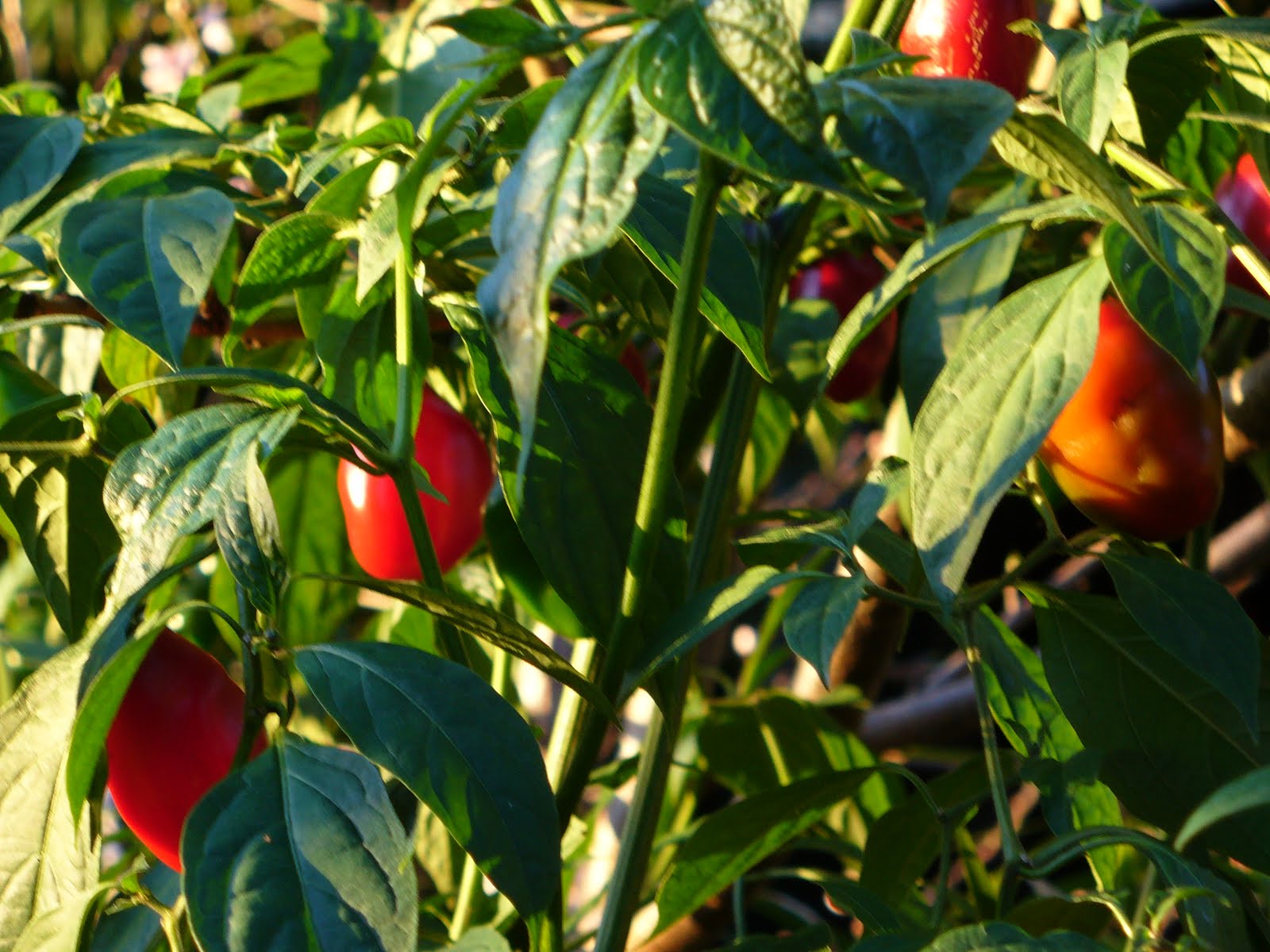
This tree chili or rocoto chili just grows away in this weather and produces chilis throughout the winter. It also grows easily from seed.


A Jicama vine grows up into a young macadamia and the apple (root) probably needs harvesting. This is useful grated into salads. It does not turn brown like a potato or Yacon once peeled.


This Star Apple (Chrysopyhllum cainito) has lost a branch in each of its two previous winters in this garden. It may be old enough to survive the cold this year. The leaves are most attractive with the brown furry underside.


A lone and small Acerola fruit lingers. The best fruiting was during late summer.


Bacopa monniera (Memory Herb) loves the shade and wet conditions

Cape Gooseberry (Physalis peruviana) cases yet to dry out so the fruit is still green inside the case. The cases seem to drop and disappear as they ripen so it is a daily task to pick the ripe fruit. I am not sure yet that it is worth it.


An artichoke regrows after being cut back.  Quite a few of the seed grown artichokes were too prickly to bother with. I think this one was relatively spine free.


This nectarine is just coming into flower. I suppose our winter corresponds to its native spring. Birds, bats and fruit fly consumed most of last years crop.


Galangal thrives in part shade and evening sun. I have yet to dig and use this plant.


Two pics of a lone fruit on a Peanut Butter (Bunchosia) Fruit tree. This is more of a shrub at the moment and the fruit is smaller than the egg sized fruit I was expecting. It tastes sweetish and the texture is peanut butter like. 


Perhaps as this tree ages the fruit will increase in size. I'm hoping!!


Mushroom plant (Rungia klossii ) thrives in shade with plenty of water as long as it is not too cold. There is plenty still growing to add to stir fries, soups and stews, even sandwiches, for a mushroom flavour and protein. The red stems belong to an amaranth that is still lingering.

Enjoy
John


Sunday, 26 June 2011

Growing Vegetables and using Bamboo; Ideas from Japan

We thought folk might be interested in how vegetables are still grown by many semi-urban and rural Japanese. Carol and I took a few photos as we explored Kyoto, Takayama, Hiroshima and Osaka by rail and bus. Don't forget a double click enlarges the photo.


This sign did catch the eye and seemed most appropriate for the Bellingen Seed Savers blog. In reality this shop was selling clothing.

 We were visiting in early to mid June and the weather was very hot and steamy, just like a NSW Mid North Coast summer but following the very cold Japanese winter. Many of these gardens were in a rural village in the mountains surrounded by still snowy peaks. Black plastic was commonly used to warm the soil for some crops and to suppress weeds. Interesting to see here the use of recycled plastic stakes in a land that has made the use of bamboo an art.


Japanese cities merge into villages with rice fields and vegetable gardens. Only the hilly and mountainous ground remains uncultivated. Note the onion tops bent over to ripen the onions before harvesting.


I think these might be tree onions.


Another vegetable garden seen from the train between Kyoto and Takayama. These gardens were alongside the tracks in the river valleys.


I suspect these are cucumbers, started with black plastic to warm the soil. Outside Takayama we visited a 'traditional' village where we could get close up to many more vegetable gardens.


I would never have thought of growing a potato patch with black plastic but these plants seemed to be flourishing.


These are climbing beans, still out of season when we visited.  However, we ate soybeans in tempura (delicious) and salads and drank lots of soy milk in coffee (not so delicious). Maybe soy beans would be a useful crop in our gardens as well?


Beans, tomatoes, eggplants and capsicums. The netting was commonly used to grow beans.


Why not grow a raft of water-loving vegetables or herbs on our ponds? This raft also sheltered the fish.


We could also grow a grapevine in a pot on the terrace. It might be easier to protect the fruit from the birds on a plant in a pot.


Ancient pomegranate trees, pruned and shaped for beauty over many years, were still producing fruit. It was rare to see a tree in a garden that had not been heavily pruned and shaped and sometimes supported. This allowed a dense planting in ornamental gardens.


An ancient plum tree orchard at the Shukkeien Garden, in this case the plum trees are grown more for the flowers in Spring rather than the fruit. Note the support for an ancient branch trained for a weeping effect.


When you see the meticulous pruning of the branch tips to induce a 'cloud pruning' effect it is easy to understand the time and care the Japanese expend on their trees. It might take a few days to prune a pine tree this size. You can clearly see the technique removes the growing green tip and leaves a smaller twig now inclined to branch and to grow densely and horizontally rather than vertically.


In the Bellingen area we often grow bamboo to use around the house and yard. Here are a few ways the Japanese use bamboo. It is used extensively, in this case to retain a bank.


Bamboo makes a useful barrier.......


.... or fence, here a lattice attached to pine poles. The lattice is screwed or wired to the poles  and the black cord is tied over the screw to achieve a more authentic effect.


Here the bamboo is used to contain the bushy tips of the plant to achieve a brush effect. There is also a small gate inserted to allow access to this bamboo grove on the outskirts of Kyoto.


Here the bamboo lathes are used cleverly to disguise a PVC pipe emptying storm water into a garden drain.


Larger bamboo poles make a comfortable seat when tied to a steel frame.


This gate is more decorative than useful but the design could easily be adapted to achieve a gate more resistant to livestock.


If you are growing Camelia Chinensis (tea) at home, the bushes do thrive in our climate, then you may be interested in this small tea garden in the larger Shukkeien Garden in Hiroshima. The bushes are kept to waist height. Small tea gardens, this size, were seen attached to many houses on the outskirts of the cities and towns. I think I will be taking cuttings from my bush and planting out more to achieve at least a row of bushes. I grew to enjoy the green tea easily made from the tips of the bush.


A miniature rice paddy with irises grown for effect in the same garden.

All this pruning, shaping of trees and the use of bamboo adds up to a truly beautiful garden. The Shukkeien Garden is now restored to its full glory. The buildings and vegetation were restored after the A-bombing of Hiroshima.


Camphor Laurel trees are treasured in Japan and used extensively. They are constantly pruned to manage their growth and to create a cloud effect but I doubt their fruits are a problem to the native bush in Japan. These trees (below) grow around the A-bomb dome in Hiroshima, a sacred site for many. Folk in Bellingen, with its controversial Camphor Laurel trees, may be particularly interested in this photo.


Thursday, 2 June 2011

Bellingen Seed Savers Visit to Jason's Plot at Valery on 2nd June

Despite the miserable weather a small intrepid band of Seed Savers enjoyed a very interesting afternoon on the verandah, discussing the challenges and advantages of the block, the aspect, the terrain and the design possibilities.  Jason and Toni talked of their goals and dreams for their property.  We shared afternoon tea throughout the afternoon as we looked out over the fruit trees.  

Beryl who is a champion preserve maker. left happily clutching a large bag of Davidson Plums which were gathered in anticipation of very tasty jam


The old orchard has a lot of potential


What plant is this?  It grows very tall on the hillside.  We recognised it as a weed but no-one could identify it.


Tuesday, 24 May 2011

More About Bellingen SeedSavers Visit to Carole's House


Hi Seed Savers

We had a wonderful afternoon at Carole’s inspirational house and garden this month.  Carole warned us that she had been away for a while and wouldn’t have much to show us – far from it!  From the bathtub of Water Chestnuts and the Taro to the extraordinary range of vibrant chillies, from the Sword to the Winged Beans, the pineapples to the berries and much more it was all so interesting.  Carole brings in as little as possible to add to the soil, concentrating on using her own compost. The garden continually expands, within and outside the netted area.  See the photos on the BSS blog.

The Cancer Council Biggest Morning (Afternoon) Tea that we shared at Carole’s was delicious and Lynda was able to send $50 to the Cancer Council so thank you for that. Carole even offered us a tasting of her home-made Davidson Plum Wine – the verdict was ‘beautiful’.

Lynda was asked by a number of Seed Savers for her Sweet Potato Cornbread recipe so this is attached. We many of us seem to have a large harvest of sweet potato so this was particularly appreciated.  Thank you to everyone for bringing such lovely food and for donating to the appeal.

Thank you so much Carole for hosting the May Gathering.

A Valuable Book:

I have Penny Woodward’s book ‘Asian Herbs & Vegetables – How to identify, grow and use them in Australia’ on loan from a friend and I am excited about the amount of detailed information it includes on all those valuable, resilient vegetables that many of our members have been growing and sharing in this region since we came together.  The book covers the origins of each plant, lists the names under which it is known, describes its appearance and method of cultivation, suggests a number of uses and gives some nutrional information.  Also great photos.

I brought the book to our last Gathering so that people could have a look at it and I subsequently placed an order for seven books at The Yellow Shed in Bellingen.  In ordering more than four copies, we receive a 10% discount on the usual price of $26.95.  If four or more other people wanted to acquire the book, I would be willing to order a quantity at this slightly reduced price.  Let me know if you want one.  If you are not in the Bellingen area, I would need to charge postage.
Penny Woodward’s website:  http://www.google.com.au/

Seeds for the Spring Plant Fair

Would you please let me know what seeds you hope to have ready for the next Plant Fair on 10 September? This is a good time to plan so that you can make sure you save the seeds from the best plants and protect them from cross-pollination.

Long Term Seed Storage

We again discussed this matter.  Although our main aim is to have our seeds circulating around the area, we also need to save some longer term. I took to the last Gathering a small domestic cryovac kit that might be suitable for our purposes.  A friend showed me hers and demonstrated it to me.  You can see it being used at www.idemo.com.au/shop/Ezi-Seal+Vacuum+Sealer/Ezi-Seal+Vacuum+Sealer.  Scroll down the right-hand column and click on the 1 min video.  The kit costs around $40, including four reusable bags and you can buy extra bags at $20 for four.  The price seems to vary with the supplier.

Maybe next time you are in a store you could have a look around to see what else is available.  I believe there are heavier duty kits which cost one or two hundred dollars.

I would appreciate your feedback on this idea – would you approve of BSS purchasing one?

Next Gathering
Jason’s block on Hydes Creek Road, North Bellingen
Thursday 2nd June
1pm

Jason has a block of land which is a bit further along Hydes Creek Road than North Farm (for those who have been there).  It is in the very earliest stages of development and Jason very kindly invited us to visit. It will be a great opportunity for us to discuss the design possibilities, whether we are in a similar situation or have spent years working on ours.  It should be very interesting and, as usual, it should promote very interesting discussion.

Once again, car pooling is highly recommended and all other details will be sent to you when you RSVP – by Tuesday 28 May please.

I would you like to suggest that we bring along the ingredients for any special tea that we enjoy so that we can do some sampling.  As an example, I love Lemon Myrtle Tea, which I drink every day if I am home. I will bring along fresh leaves to share and perhaps you could do the same with your favourite.

I am so enjoying the lovely Autumn weather – a wonderful time to be out in the garden working hard. Let’s hope it will be like this when I see you at Jason’s.

Cheers
Irene


LATE NEWS
Hi Seed Savers

A few things have come up since I sent out the Newsletter last week:

The Books have arrived
We collected the seven copies of Penny Woodward’s book ‘Asian Vegetables & Herbs’ on Saturday ordered by:  John V., Rhonda, Carole H., Lynda and Jen (Laurie and I have ours).  I will bring them to our Gathering next week but, if you are anxious to have yours in your hot little hands immediately, let me know.  I will be in Bellingen for a few hours tomorrow – Tuesday, otherwise at the Growers’ Market on Saturday, so we might be able to arrange a handover.  The price is $25 a copy.

* North Bank Community Garden
I was at the Garden yesterday in relation to the Transition Bellingen Reskilling Workshop on Organic Garden and wanted to let you know how fantastic the garden is looking .  It’s a year since we last Gathered there and I will make sure that we do it again, perhaps in August.  Each time I go there I see the enormous amount of hard work and creativity being poured into the place by Steve, Jesse and volunteers.  I have mentioned before that Jesse had taken on Aleasa’s seedling business which is now located at NBCG and it is now powering ahead and I urge you to have a look.  The garden is accessible all day so you can go at a time to suit you.

Cheers
Irene


Lynda's Sweet Potato Cornbread  

900g sweet potato – boiled and mashed (to yield 2 cups)
125g butter
4 eggs lightly beaten
Quarter cup brown sugar
Half teaspoon bicarb of soda
Pinch salt
1 teaspoon ground cinnamon
1 cup plain yoghurt
2 cups fine polenta 
Preheat oven to 180’ – butter a 20cm square cake tin.
Pure sweet potato in a mixer or food processor with all ingredients except yoghurt and polenta.
Stir in Yoghurt and polenta and pour into prepared tin.
Bake for 45 minutes or until a fine skewer inserted in the centre comes out clean. 
Cool a little before turning out and cutting into squares. 

Thursday, 12 May 2011

You Can Follow Our Blog

By clicking on the follow button in our sidebar you can ensure you receive our updates. You can choose whether you follow publicly or privately.


Tuesday, 10 May 2011

Herb Tea Punch


HERB TEA PUNCH


Ingredients:


Berries of the Forest (or a similar cordial)
Lemon Grass
Lemon Myrtle leaves
Clove Basil leaves/seeds
Rosella fruit (Cranberry Hibiscus leaves might substitute)
Garden Mint and Peppermint
Orange rind.

Place a tablespoon of each of the above ingredients in a stainless steel saucepan or glass basin. ( Snip them a little with your kitchen scissors, to release more flavour.)

Cover with a litre or more of boiling water, stir for a minute and cover with lid, to prevent loss of flavours from evaporation.
Infuse until almost cold
Strain, pour over iceblocks into Punchbowl.  Chill.

The strained Herbs may be used a second or third time to extract the flavours and constituents.  Add to the punchbowl. Keep covered in the refridgerator.

When ready to serve, add a bottle of sugar free, preservative free, juice of your choice and a bottle of mineral or soda water. Stir to blend  and pour the PUNCH into glasses over some icecubes.

Elaine used sugar-free cranberry juice but advises that pomegranate, apple or blackcurrant juice also blend well.

Homer added wine to his 'erb teas. ENJOY.

Bellingen Seed Savers Visit to Carole's Garden, May 2011


Carole has a netted garden split into two sections. In one section the netting goes to ground level to keep the small birds out. The other area is netted sufficiently to protect from larger birds and fruit bats.


In the foreground you can see Carole's compost heaps, some covered to protect from rain and to conserve heat.


The Taro plant at the corner of the garden (bottom right) is thriving. This was the first day without rain after a week of showers.


Here are more compost heaps at various stages of development. Carole says that her self-seeded avocado (in the background) is really shading her garden too much so she keeps pruning out the top. This avocado has prospered in contrast to grafted avocados that have succumbed to root rot.


An old bath filled with Water Chestnuts is an ideal way to keep control of a plant that can become invasive and also makes harvesting a 'breeze'.
 

The garden that is fully netted has a variety of healthy chilis.


Aren't these chilis decorative? They also look super hot.


Nestled against the warmth of a north facing wall of Carole's house are these healthy pineapples. They look as decorative as any of the bromeliads.
The view from Carole's verandah where we enjoyed our usual afternoon tea feast. We especially enjoyed Lynda's slice made from sweet potato and polenta. Our gardens are flush with sweet potato at the moment so this a useful way to use this sweet vegetable.


Elaine had brought along a branch of her Clove Basil in full seed. This is a useful place to post Elaine's recipe for her delicious punch flavoured with Clove Basil.

HERB TEA PUNCH


Ingredients:


Berries of the Forest (or a similar cordial)
Lemon Grass
Lemon Myrtle leaves
Clove Basil leaves/seeds
Rosella fruit (Cranberry Hibiscus leaves might substitute)
Garden Mint and Peppermint
Orange rind.

Place a tablespoon of each of the above ingredients in a stainless steel saucepan or glass basin. ( Snip them a little with your kitchen scissors, to release more flavour.)

Cover with a litre or more of boiling water, stir for a minute and cover with lid, to prevent loss of flavours from evaporation.
Infuse until almost cold
Strain, pour over iceblocks into Punchbowl.  Chill.

The strained Herbs may be used a second or third time to extract the flavours and constituents.  Add to the punchbowl. Keep covered in the refridgerator.

When ready to serve, add a bottle of sugar free, preservative free, juice of your choice and a bottle of mineral or soda water. Stir to blend  and pour the PUNCH into glasses over some icecubes.

Elaine used sugar-free cranberry juice but advises that pomegranate, apple or blackcurrant juice also blend well.

Homer added wine to his 'erb teas. ENJOY.


LinkWithin


Related Posts Plugin for WordPress, Blogger...

LinkWithin

Related Posts Plugin for WordPress, Blogger...